Iran World Cup team coach says it was booted from U.S. right after first match
"Iran's World Cup team faces more challenges after being ordered to leave the US."
Iran's World Cup team was ordered to leave the US and return to its training base in Mexico just hours after its first match. Coach Amir Ghalenoei announced this decision after the team's 2-2 draw with New Zealand on Monday night. The team had expected to spend the night in California to recover but was told to immediately get on a plane for the 140-mile trip back to Tijuana.
The Iranians' World Cup cycle has been in upheaval since the US and Israel began a war against Iran on February 28. Despite this, Iran decided to compete in the tournament, even after FIFA rejected its request to move its three group-stage matches out of the US. The team's preparations were further complicated by the denial of visas to several important staff members, including the president of Iran's football federation, coaching support personnel, and media officials.
Iran captain Mehdi Taremi expressed his frustration with the situation, stating that the team endured five hours of travel and security checks during what is normally a short trip from Tijuana to the Los Angeles area on Sunday. Coach Ghalenoei also decried the team's lack of preparation time, attributing the injury problems to the lack of proper adjustment time caused by Iran's bureaucratic and diplomatic obstacles.
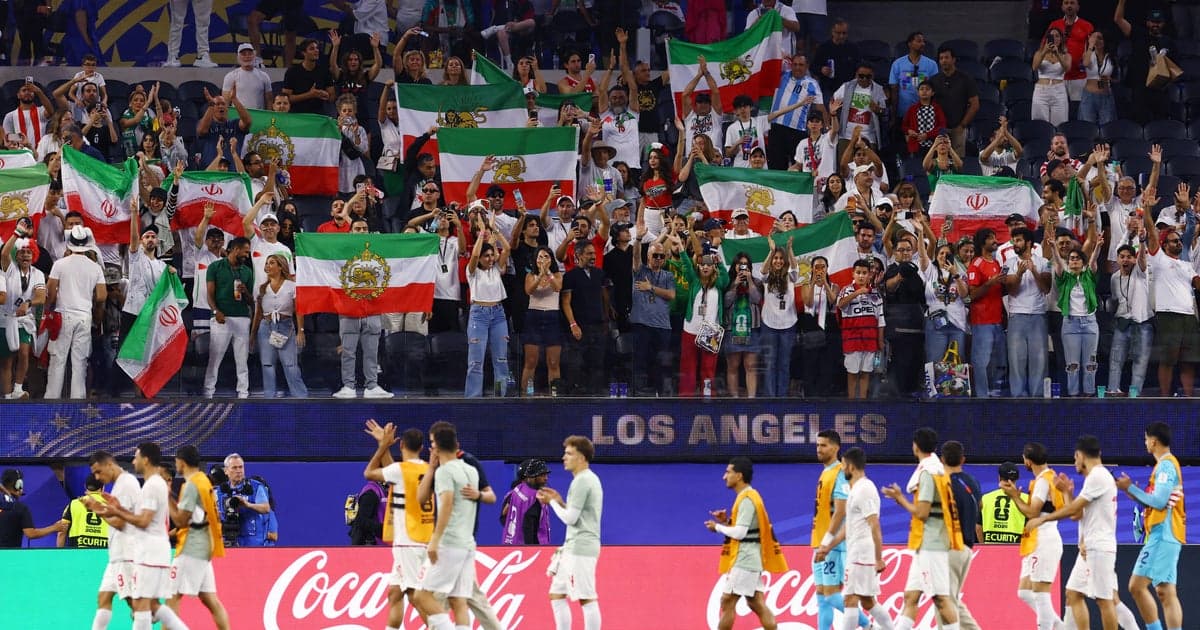
The game against New Zealand was played in a tense atmosphere, with a strongly pro-Iranian crowd at SoFi Stadium near Los Angeles. The stadium has the world's largest population of Iranians outside Iran, and the crowd was divided between supporting the team and protesting the current Iranian government. Several hundred Iranian Americans protested the government outside, while many fans from the diaspora jeered and turned their backs on the field during the national anthem.
The Iranians' remaining two games in group stage play are against Belgium in Inglewood on Sunday, followed by a trip to Seattle to face Egypt next week. The team's chances of advancing to the next round are uncertain, given the challenges they have faced so far. Coach Ghalenoei stated that the team is "perhaps the most oppressed in the World Cup," and that the decision-making for the team is being made elsewhere.
The situation has sparked criticism of FIFA and the US authorities, with many questioning the reasons behind the decision to order the Iranian team to leave the US. The team's players and staff are exhausted and demoralized, and it remains to be seen how they will perform in their upcoming matches. As the tournament continues, the focus will be on the Iranian team's ability to overcome the obstacles they have faced and compete at their best.
In the meantime, the team's captain, Mehdi Taremi, has called on FIFA to provide more support to the team, stating that "everything is like a disaster, actually, for us." The situation is a complex one, with political and diplomatic tensions at play. The Iranian team's participation in the World Cup is a significant event, and the challenges they have faced have sparked a wider debate about the role of sports in international relations.
As the World Cup continues, the Iranian team's story will be one to watch, both on and off the field. The team's ability to overcome the obstacles they have faced and compete at their best will be a testament to their strength and resilience. Despite the challenges, the team remains determined to make the most of their time in the tournament and to make their country proud.
The Iranian team's experience is a reminder that sports can be a powerful tool for bringing people together and transcending political and cultural differences. However, it also highlights the complexities and challenges that can arise when sports and politics intersect. As the World Cup continues, it will be interesting to see how the Iranian team's story unfolds and what implications it may have for the future of international sports competitions.