
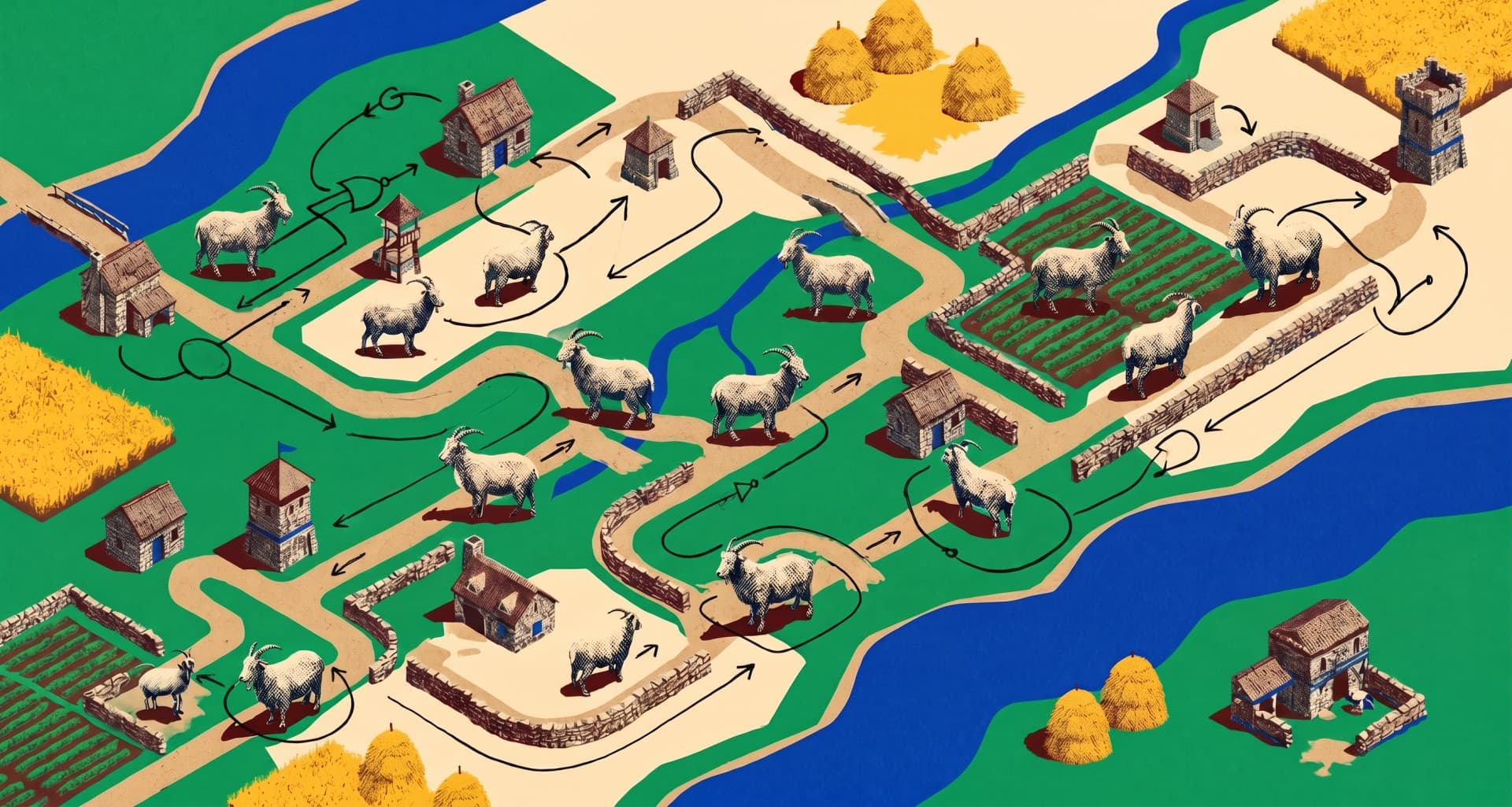
Microsoft researcher builds a working neural network out of goats in Age of Empires II.
"A surprising experiment reveals deep flaws in AI research methods, sparking debate about the nature of intelligence."
A Microsoft researcher recently conducted an unusual experiment, building a working neural network using goats, bridges, and ice ramps in the Age of Empires II map editor. This unorthodox approach was not merely a joke, but a pointed critique of current AI research methods. By replacing the typical chat interface with wandering goats, the researcher aimed to highlight the flaws in assuming language models possess human-like traits before experimentation even begins.
The researcher's analysis of 315 papers found that more than half of them already assumed language models had human-like traits before the experiment started. This assumption can lead to misleading conclusions and a lack of understanding of the actual capabilities of AI systems. The experiment using goats in Age of Empires II demonstrates that the math behind the neural network does not change, but the perception of interacting with a human-like entity does. This raises important questions about the nature of intelligence and how it is currently being studied in the field of AI.
The Age of Empires II map editor provided a unique platform for the researcher to test their hypothesis. By using goats, bridges, and ice ramps, they were able to create a functioning neural network that could be observed and analyzed. The use of a game environment allowed the researcher to simplify complex concepts and illustrate the underlying mechanics of neural networks. This approach also enabled them to strip away the assumptions and preconceptions that often accompany traditional AI research methods.
The implications of this experiment are far-reaching, suggesting that the field of AI research needs to re-examine its methods and assumptions. The tendency to attribute human-like traits to language models can lead to overestimation of their capabilities and a lack of understanding of their limitations. By recognizing these flaws, researchers can work towards developing more accurate and reliable AI systems. The use of unconventional approaches, such as the goat neural network, can help to challenge existing assumptions and drive innovation in the field.
The experiment has sparked debate about the nature of intelligence and how it is currently being studied. Some researchers argue that the assumption of human-like traits in language models is necessary for advancing the field, while others see it as a limitation that hinders true understanding. The Microsoft researcher's work has highlighted the need for a more nuanced approach, one that recognizes the complexities and limitations of current AI systems. By acknowledging these limitations, researchers can work towards developing more sophisticated and effective AI systems that truly replicate human-like intelligence.
The use of goats in Age of Empires II has also raised questions about the role of creativity and humor in scientific research. The experiment's unconventional approach has drawn attention to the importance of thinking outside the box and challenging established methods. By embracing unusual and innovative approaches, researchers can drive innovation and make breakthroughs in their fields. The goat neural network has become a symbol of the need for creative thinking and a willingness to challenge assumptions in the pursuit of scientific progress.
In conclusion, the Microsoft researcher's experiment using goats in Age of Empires II has shed light on the flaws in current AI research methods. By highlighting the assumption of human-like traits in language models, the researcher has sparked a necessary debate about the nature of intelligence and how it is being studied. The implications of this experiment are far-reaching, and the use of unconventional approaches has the potential to drive innovation and challenge existing assumptions in the field of AI. As researchers continue to develop and refine AI systems, they must recognize the importance of nuanced and accurate understanding, rather than relying on assumptions and preconceptions.


