Netflix Reveals Dealies as Sci-Fi Duo Tackles Retail Satire
"Cosmic horror creators pivot to big box retail, promising depth beneath fluorescent lights with animated satire."
Netflix has greenlit "Dealies," a workplace sitcom animated by the duo behind the acclaimed sci-fi series "Scavengers Reign," signaling a bold pivot for the streaming giant into grounded yet surreal social commentary. Co-creators Joe Bennett and Ted Travelstead, architects of interplanetary dread and pharmaceutical conspiracies, now train their incisive lens on the mundane, high-pressure world of big box retail, scheduled for a 2027 release.
The juxtaposition is jarring, and perhaps deliberately so. Bennett and Travelstead, known for the existential dread permeating "Scavengers Reign" and the complex emotional layers beneath the comedic surface of "Common Side Effects," now tackle the aisles of a fictional superstore. This isn't merely a genre shift; it's a calculated exploration of the overlooked. "Dealies" promises to dissect the invisible labor, micro-politics, and quiet desperation that fuel the machine of everyday commerce. The premise, seemingly pedestrian on paper, holds immense potential for Bennett and Travelstead’s signature blend of sharp satire and unexpected pathos.
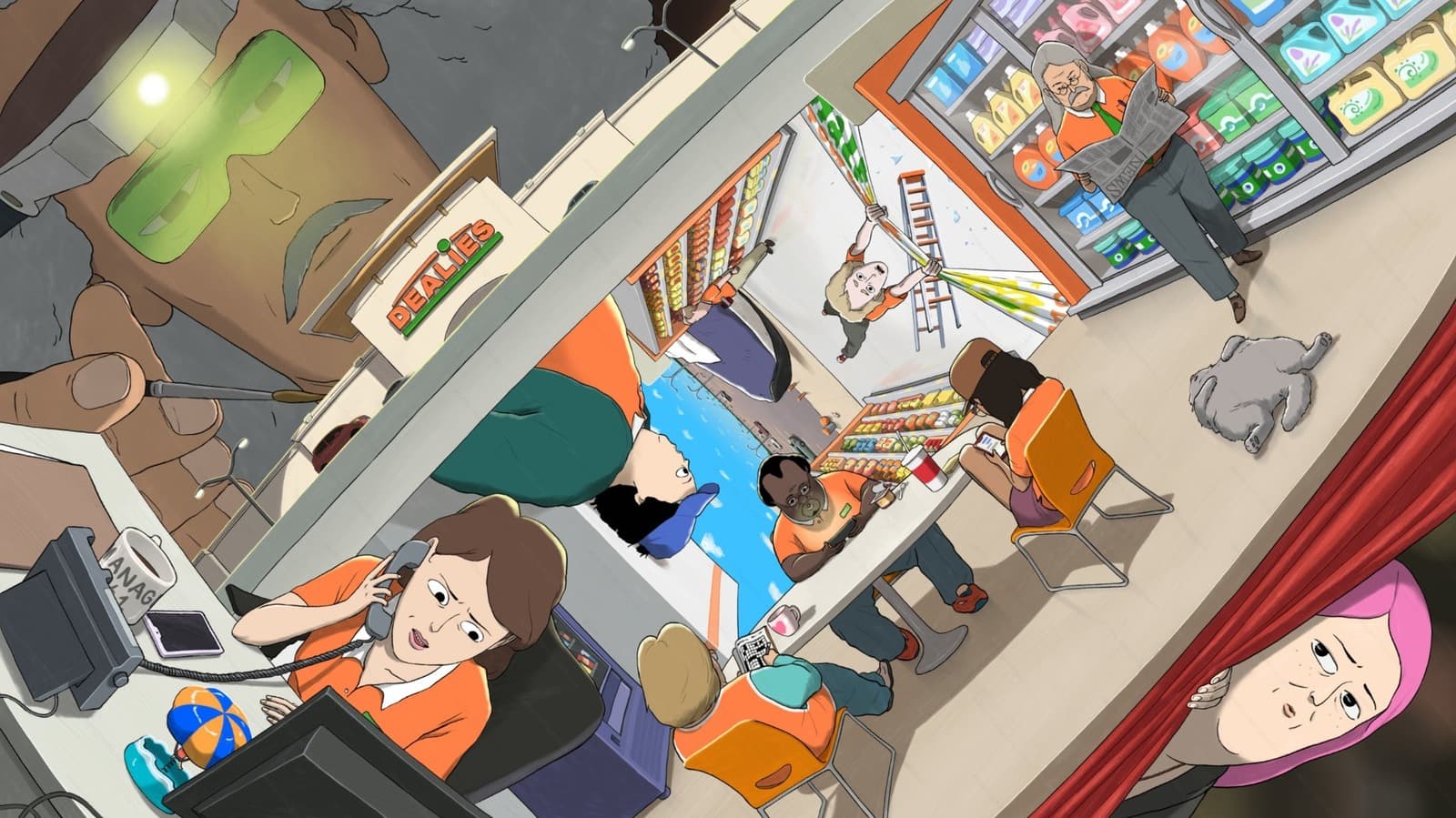
Netflix’s announcement, accompanied by character art and a surreal opening credits sequence posted by Green Street Pictures, hints at the creative DNA the show will inherit. The prominent "big expressive heads" aesthetic, a Green Street hallmark, immediately signals a return to the studio’s distinctive visual language seen in "Common Side Effects." More intriguingly, the credits sequence, described as "almost Paprika-esque," suggests a willingness to embrace the surreal and the psychological, even within a seemingly realistic setting. This visual style isn't just aesthetic; it’s a tool. Exaggerated features can amplify emotional states, making the subtle humiliations and small triumphs of retail work viscerally relatable. The Paprika-esque undertones imply a narrative that might delve into the subjective experience of the employees, blurring the lines between the fluorescent-lit reality of the store and the internal landscapes of its staff.
The true test for "Dealies" lies in its ability to transcend the workplace sitcom tropes it seemingly embraces. While sitcoms about dysfunctional workplaces are a staple, Bennett and Travelstead’s track record suggests they won’t settle for easy gags. "Common Side Effects," despite its comedic premise about a miracle drug conspiracy, earned critical praise for weaving genuine emotional drama and character depth into its narrative fabric. It balanced absurdity with gritty realism, revealing the human cost beneath the farce. "Dealies" aims to replicate this alchemy. The core question isn't whether the show can make scanning barcodes funny; it’s whether it can illuminate the systemic pressures, the unspoken hierarchies, and the quiet resilience of a workforce often invisible in the cultural conversation. The show’s success hinges on its ability to find the profound in the profane, the existential in the espresso machine.
From an industry perspective, "Dealies" represents a nuanced play by Netflix and a significant statement from Bennett and Travelstead. For Netflix, it’s a strategic move into the animated adult comedy space, a genre they’ve aggressively pursued ("Big Mouth," "Inside Job," "Super Crooks"). However, the network’s recent history with animated sitcoms is mixed, with some garnering cult followings but few achieving the breakout status of live-action hits. The involvement of proven auteurs like Bennett and Travelstead lends "Dealies" credibility and a built-in audience from their previous work. For the creators, this venture is a deliberate departure from the cosmic and conspiratorial. It’s a return to terrestrial concerns, a chance to apply their narrative sophistication to a setting audiences encounter daily. It’s an assertion that complex storytelling isn’t limited to space operas or dystopian thrillers; it can thrive in the break room and on the sales floor.
The implications of "Dealies" extend beyond its immediate narrative. If successful, it could validate a subgenre of animated satire focused on the minutiae of modern service-industry life, exploring themes of labor exploitation, consumerism, and the psychological toll of constant customer interaction with the depth usually reserved for prestige dramas. Green Street Pictures’ involvement is crucial; their animation style provides the necessary flexibility to juxtapose the mundane with the metaphorical, allowing the show to visually represent the internal monologues and suppressed frustrations of its characters. The potential for "Dealies" to become a touchstone for discussions about the realities of retail work, elevated by its artistic execution, is substantial. It could force audiences to look beyond the price tags and consider the human cost of convenience.
The road to 2027 presents challenges. Can the sustained focus on a single workplace environment maintain narrative momentum without relying on repetitive gags? Will the show balance its social critique with the accessibility required for broad appeal on a global platform like Netflix? Bennett and Travelstead have proven they can balance tone and depth, but the scale of this undertaking is different. Their ability to inject "Common Side Effects"-like emotional resonance into the daily grind of stocking shelves and handling returns will be paramount. The fluorescent lights of "Dealies" must illuminate more than just products; they must cast revealing shadows on the lives lived within them.
Ultimately, "Dealies" is a high-stakes bet on the power of animated satire to dissect the fabric of ordinary life. It leverages the unique talents of creators who excel at finding the extraordinary in the seemingly ordinary, promising a show that uses the familiar setting of a big box store as a lens to examine broader societal currents. Its success could redefine the animated workplace comedy, proving that the most profound stories might not be set among the stars, but rather in the fluorescent aisles of the everyday.