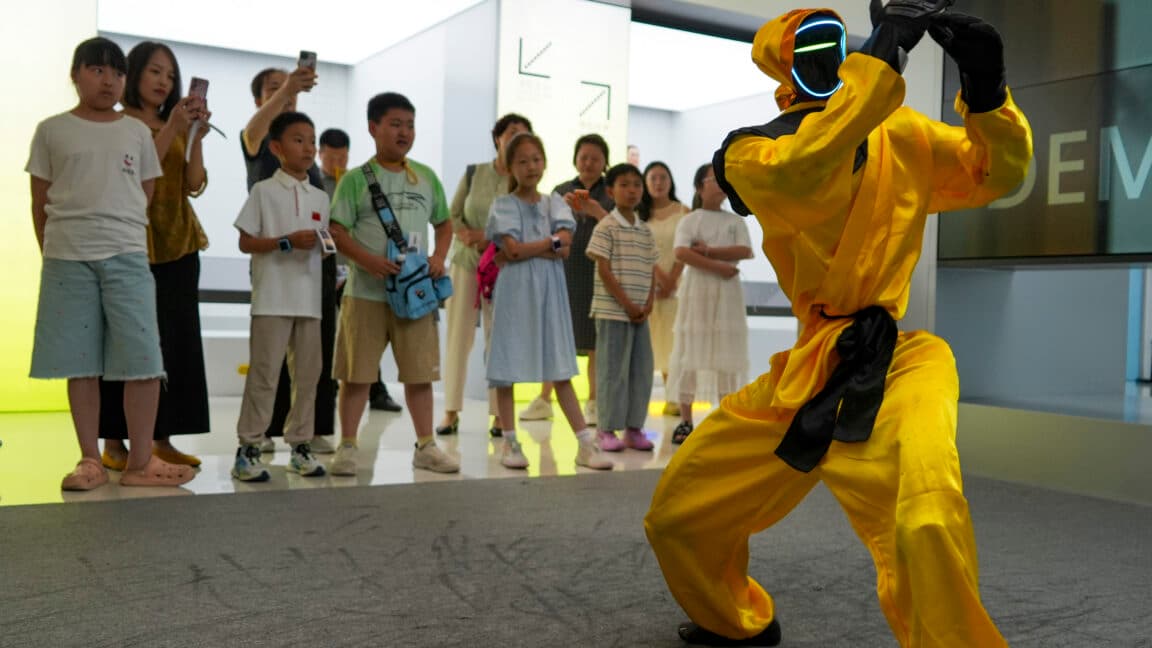
The skeptic’s guide to humanoid robots going viral on the Internet
"Demonstrations of humanoid robots can be misleading, creating unrealistic expectations about their capabilities."
Jonathan Hurst, cofounder of Agility Robotics, says robot demonstrations distort public perceptions. At Oregon State University, Hurst researches robotics, witnessing firsthand the gap between demonstrations and real-world capabilities. Recently, a wave of robot videos has gone viral, showcasing humanoid robots performing acrobatic feats and handling household chores. However, these demonstrations often rely on careful staging and editing, creating an unrealistic impression of the robots' abilities.
The latest wave of robot videos can be particularly deceiving, given the human tendency to anthropomorphize objects with a humanoid figure. A robot arm doing a dance move may seem impressive, but a humanoid robot doing the same move can trigger more misleading assumptions. People automatically extrapolate and assume that the robot can do all the things a person can do, which is not true. Many startup companies prey on this misconception to raise funds.
One of the biggest challenges in robotics is developing robots that can generalize their skills across different conditions and environments, just like humans. However, this degree of generalization is practically impossible to capture in a single robot demonstration. Sergey Levine, a computer scientist at the University of California, Berkeley, and cofounder of Physical Intelligence, explains that the real measure of robotic capabilities involves conducting quantitative, large-scale evaluations in real-world environments.
Levine notes that there's always a gap between what somebody can show in a demo and what the real capability of the robot is. For instance, a robot may be able to pour a glass of wine, but can it pour it out of any bottle and into any glass in any environment? That's a much harder task than having a robot do a backflip in a staged demo. To truly assess a robot's capabilities, it's essential to look beyond the demonstrations and consider the underlying technology and testing procedures.
When watching robot demonstration videos, there are several things to keep in mind. First, such demonstrations are not necessarily indicative of robots operating autonomously without human control or oversight. Many robots still rely on human operators directly controlling their actions through teleoperation. Unless a research paper or company explicitly mentions that the robot is completely autonomous, it's essential to be skeptical.
Another question to consider is whether the demonstration shows robots tackling a completely new test environment for the first time or whether they are simply repeating a task they had already learned to do in that specific training environment. The new test environment would be significantly more impressive, as it would showcase the robot's ability to generalize its skills and adapt to new situations.
It's also worth checking the video playback speed, as robots are often very slow for safety and other reasons. Companies may sometimes disclose that a robot demonstration video is running at two times or four times normal speed, meaning the robot could be taking twice as long or four times as long as a human to do the same task. This can significantly impact the perceived capabilities of the robot.
Robot demonstration videos can vary wildly in their informative value and transparency. Some are clearly intended to be performative entertainment clips that can go viral on social media, while others may provide a more behind-the-scenes look at the robot training process, acknowledging mistakes along the way. However, even if a robot demo video appears impressive and authentic, it's essential to approach it with a critical eye and consider the potential limitations and biases.
The implications of misleading robot demonstrations extend beyond the tech industry, as they can influence public perception and policy decisions. As robots become increasingly integrated into our daily lives, it's crucial to have a realistic understanding of their capabilities and limitations. By being aware of the potential for deception in robot demonstrations, we can foster a more nuanced discussion about the role of robots in society and ensure that their development is guided by a clear understanding of their potential and limitations.
In conclusion, while robot demonstrations can be impressive and entertaining, it's essential to approach them with a critical eye. By considering the potential limitations and biases of these demonstrations, we can gain a more realistic understanding of the current state of robotics and the challenges that lie ahead. As the field continues to evolve, it's crucial to prioritize transparency and accuracy in robot demonstrations, ensuring that the public has a clear understanding of the capabilities and limitations of these technologies.