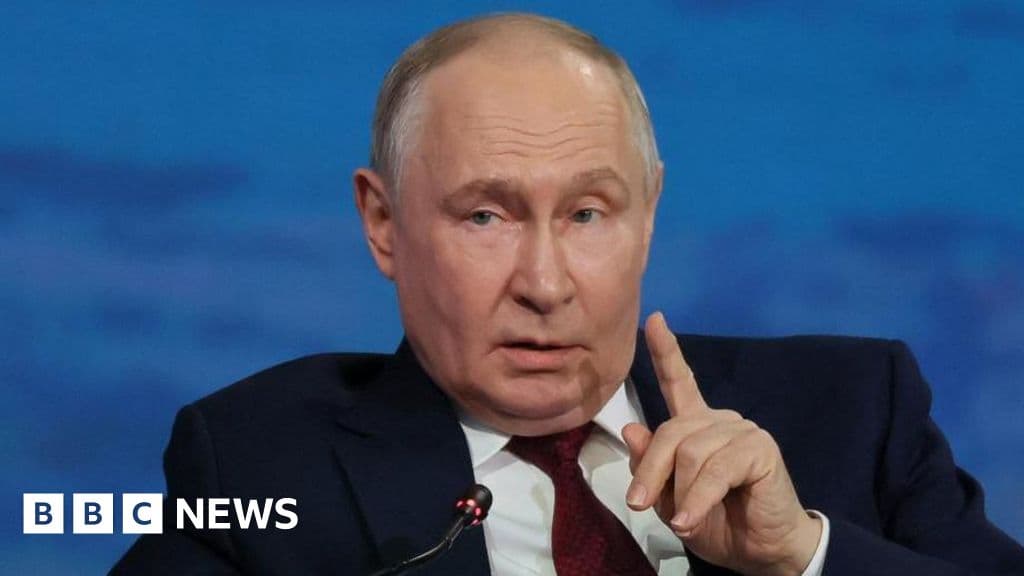
Putin says there is 'no point' meeting Zelensky over ending Ukraine war
"Tensions escalate as Russia refuses talks, Ukraine suffers heavy losses."
Vladimir Putin rejects a meeting with Volodymyr Zelensky in Russia. Putin's decision comes after Zelensky sent an open letter calling for direct negotiations to end the war between Russia and Ukraine. The letter, which Putin described as "rude," requested a ceasefire and face-to-face talks between the two leaders.
The conflict between Russia and Ukraine began in 2022, when Russia launched a full-scale invasion of Ukraine. Since then, the war has resulted in significant loss of life and destruction of infrastructure. Zelensky's letter was seen as a attempt to restart peace talks, which have been stalled for months. However, Putin's response suggests that Russia is not interested in negotiating a ceasefire or withdrawing its troops from Ukraine.
Putin's statement that he does not see any point in meeting with Zelensky is a significant setback for efforts to end the war. The Russian leader has consistently maintained that Ukraine must meet certain conditions, including withdrawing from disputed territories and abandoning its bid to join NATO, before any peace talks can take place. Zelensky, on the other hand, has refused to give up any territory or compromise on Ukraine's sovereignty.
The situation on the ground in Ukraine remains dire, with reports of heavy fighting and civilian casualties. Ukrainian forces have been striking back at Russian targets, including ships in the Sea of Azov and Russian territory. The Ukrainian military has also been targeting Russian supply lines and military equipment, in an effort to disrupt Russia's ability to wage war.
The international community has been watching the situation in Ukraine with growing concern. The United States and other Western countries have imposed sanctions on Russia in an effort to pressure Putin to negotiate a peace settlement. However, Russia has shown no signs of backing down, and the conflict continues to escalate.
The refusal of Putin to meet with Zelensky has significant implications for the future of the conflict. It suggests that Russia is committed to achieving its goals in Ukraine, even if it means continuing to fight. The Ukrainian government, on the other hand, is determined to defend its sovereignty and territorial integrity. The conflict is likely to continue, with both sides suffering heavy losses.
The economic implications of the conflict are also significant. The war has disrupted trade and commerce in the region, and has had a major impact on the global economy. The price of grain and other commodities has risen sharply, due to the disruption of Ukrainian exports. The conflict has also had a major impact on the energy market, with Russia's invasion of Ukraine leading to a significant increase in the price of oil and gas.
The humanitarian situation in Ukraine is also a major concern. The conflict has resulted in a significant displacement of people, with millions of Ukrainians forced to flee their homes. The Ukrainian government has been working to provide aid and assistance to those affected by the conflict, but the situation remains dire. The international community has also been providing aid and assistance, but more needs to be done to address the humanitarian crisis.
In conclusion, the refusal of Putin to meet with Zelensky is a significant setback for efforts to end the war in Ukraine. The conflict is likely to continue, with both sides suffering heavy losses. The international community needs to continue to pressure Russia to negotiate a peace settlement, and to provide aid and assistance to those affected by the conflict. The situation in Ukraine is complex and multifaceted, and will require a sustained effort to resolve.