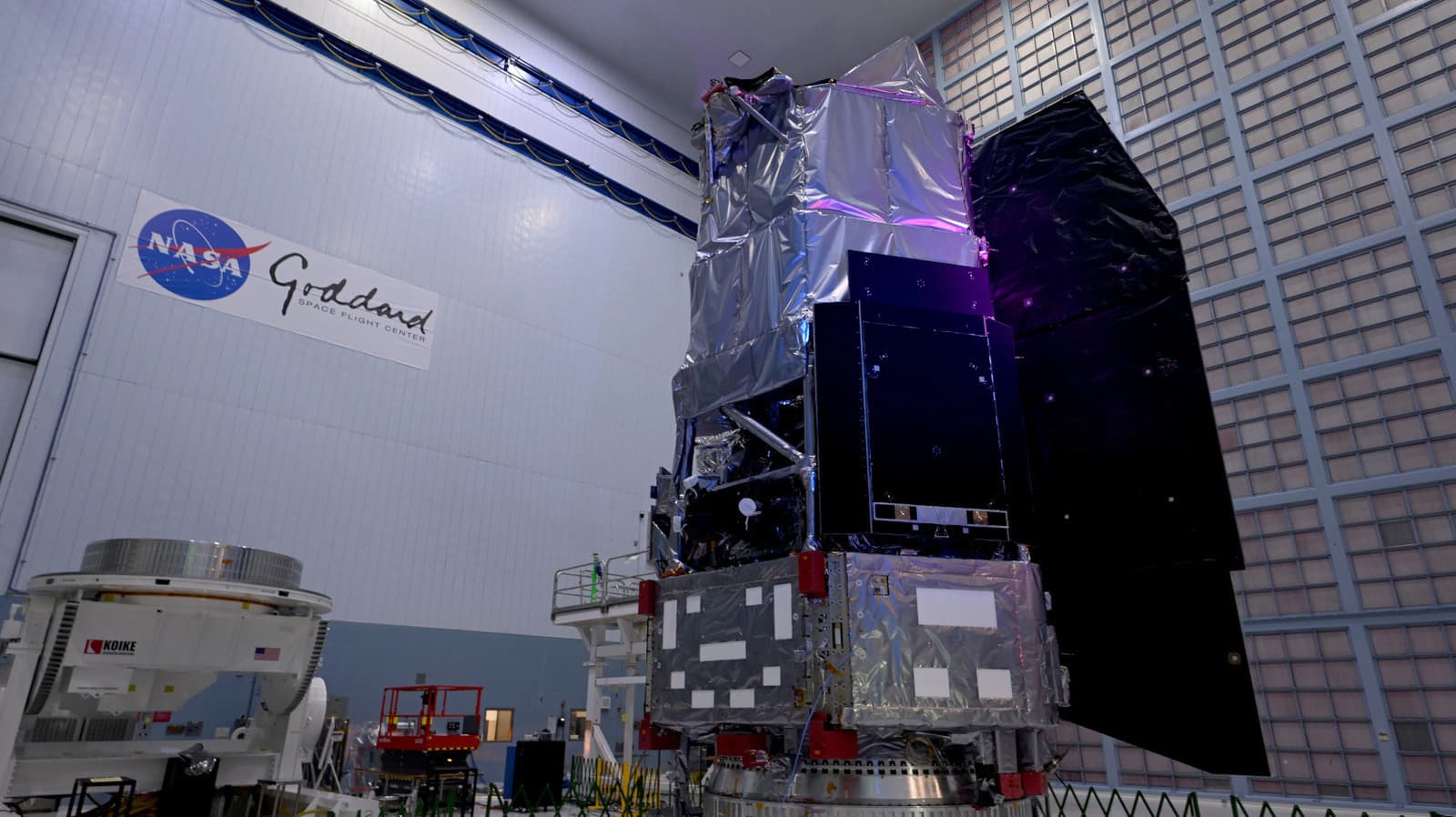
NASA's Nancy Grace Roman Space Telescope is set to launch on August 30
"NASA's new telescope will capture unprecedented views of the universe, potentially answering questions about dark energy and solar systems."
NASA is launching the Nancy Grace Roman Space Telescope on August 30, 2026, from the Kennedy Space Center in Florida. This launch is eight months earlier than initially planned, thanks to the efficient completion of the telescope's final inspection and testing. The Roman Space Telescope is a significant project, named after NASA's first chief astronomer, and it aims to explore the universe to gain insights into dark energy and the prevalence of solar systems similar to ours.
The telescope's primary mirror, which is 7.9 feet in diameter, has undergone a thorough inspection to ensure its quality and alignment. This mirror is crucial for the telescope's functionality, as it will collect and focus light from cosmic objects. The Roman Space Telescope has a field of view 100 times larger than the Hubble Space Telescope, enabling it to capture more of the sky in less time. This capability will allow the telescope to deliver unprecedented views of the universe, providing valuable data for astronomers and researchers.
The telescope is currently being prepared for shipment from the Goddard Space Flight Center in Maryland to the Kennedy Space Center in Florida. Upon arrival, it will undergo a series of tests and inspections to verify its condition after transportation. The telescope will then be loaded with fuel, encapsulated in a protective fairing, and installed on top of a SpaceX Falcon Heavy rocket for launch. The launch is a complex process, requiring precise planning and execution to ensure the telescope reaches its destination safely.
The Roman Space Telescope will join the James Webb Space Telescope at the Sun-Earth L2 Lagrange point, a location behind the Earth that provides a stable environment for space telescopes. This location allows the telescopes to maintain a consistent distance from the Earth and the Sun, which is essential for their operation. The Roman Space Telescope will work in conjunction with the James Webb Space Telescope, providing complementary observational capabilities and expanding our understanding of the universe.
The Roman Space Telescope has several key objectives, including the study of dark energy and the exploration of solar systems similar to our own. Dark energy is a mysterious phenomenon that is thought to be responsible for the accelerating expansion of the universe. By studying dark energy, scientists hope to gain a deeper understanding of the universe's evolution and fate. The telescope will also investigate the formation and evolution of galaxies, as well as the distribution of stars and planets within them.
The Roman Space Telescope's launch is a significant event in the field of astronomy, marking a major milestone in the exploration of the universe. The telescope's advanced technology and capabilities will provide unprecedented views of the cosmos, enabling scientists to answer complex questions and gain new insights into the nature of the universe. As the telescope begins its journey, scientists and researchers around the world are eagerly awaiting the data it will provide, which will undoubtedly shed new light on the mysteries of the universe.
In addition to its primary objectives, the Roman Space Telescope will also provide observational capabilities to astronomers with other goals and interests. The telescope's vast field of view and advanced instrumentation will allow scientists to study a wide range of phenomena, from the formation of stars and planets to the behavior of black holes and neutron stars. The telescope's data will be made available to the scientific community, enabling researchers to explore new areas of investigation and advance our understanding of the universe.
The Roman Space Telescope's launch is also a testament to the power of human curiosity and ingenuity. The telescope is the result of years of planning, design, and construction, involving thousands of scientists, engineers, and technicians from around the world. The telescope's advanced technology and capabilities are a reflection of human innovation and the desire to explore and understand the universe. As the telescope embarks on its journey, it carries with it the hopes and aspirations of scientists and researchers everywhere, who are eager to unlock the secrets of the cosmos and push the boundaries of human knowledge.
The Roman Space Telescope's mission is expected to last for several years, during which time it will conduct a wide range of observations and experiments. The telescope will be operated by a team of scientists and engineers from NASA and other organizations, who will work together to ensure the telescope's success and maximize its scientific return. As the telescope begins its journey, the scientific community is filled with excitement and anticipation, knowing that the Roman Space Telescope will provide a new window into the universe, revealing secrets and wonders that have never been seen before.