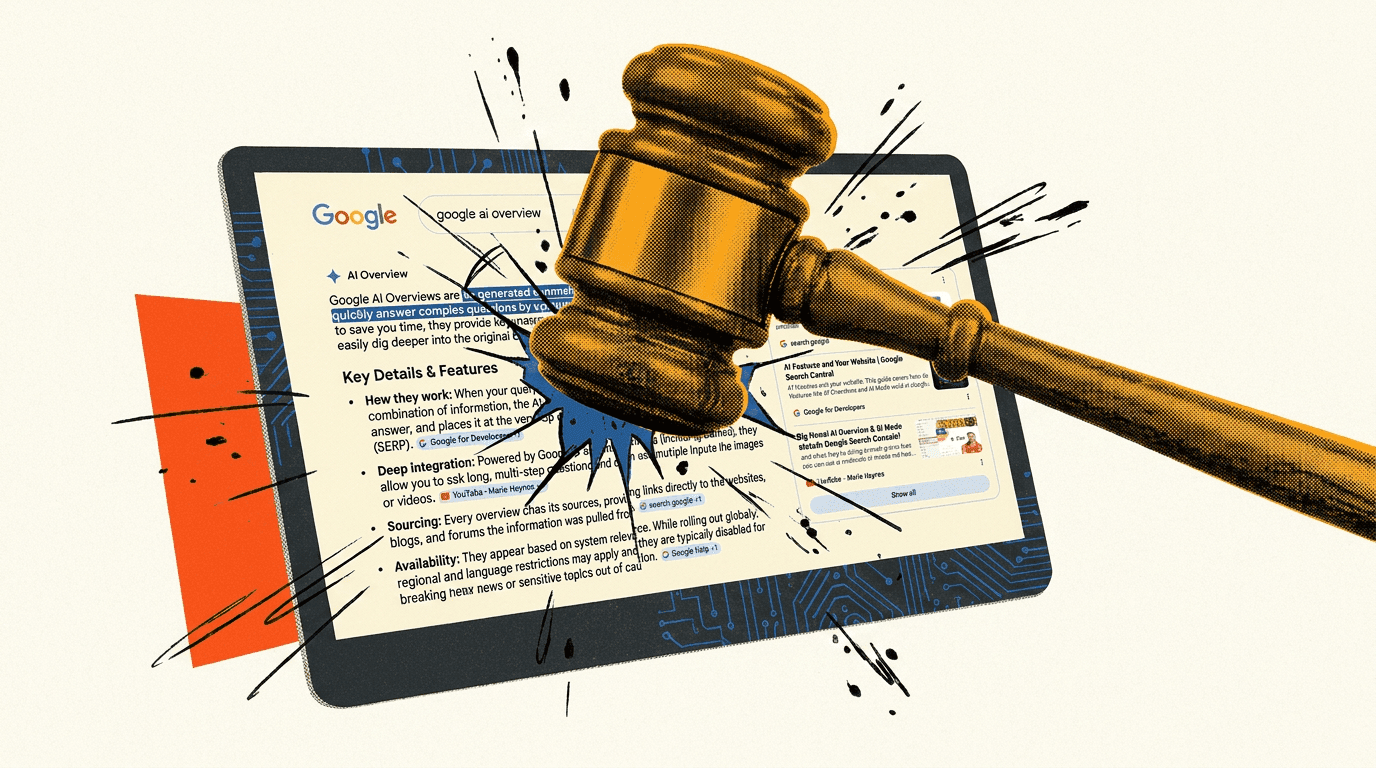
Landmark German ruling declares Google's AI Overviews are Google's own words and makes it liabl
"False information spreads quickly online. A recent court ruling raises questions about accountability."
Google faces liability in Germany. A regional court ruled that Google's AI search overviews are the company's own words, making it liable for false answers. This decision has significant implications for the tech giant and the broader industry, as it challenges the traditional limited liability protections for search engine operators.
The case centered on Google's AI-generated overviews, which falsely linked two publishers to fraud. The claims made in these overviews did not appear in any of the linked sources, highlighting the potential for AI-generated content to spread misinformation. The court's ruling suggests that Google's AI overviews are not simply a compilation of existing content, but rather a distinct form of content creation that the company is responsible for.
The German court's decision is a landmark moment in the evolving landscape of AI-generated content and liability. As AI technology becomes increasingly prevalent in online search and content creation, the question of who is responsible for the accuracy and truthfulness of this content becomes more pressing. The traditional protections for search engine operators, which have long shielded companies like Google from liability for user-generated content, may no longer apply in the age of AI.
The ruling has significant implications for Google and other tech companies that rely on AI-generated content. If the decision is upheld and replicated in other jurisdictions, it could expose these companies to increased liability for false or misleading information. This, in turn, could lead to a shift in the way that AI-generated content is created and presented, with companies taking a more active role in verifying the accuracy of the information they provide.
The case also highlights the challenges of regulating AI-generated content. As AI technology becomes more sophisticated, it is increasingly difficult to distinguish between human-generated and AI-generated content. This raises important questions about the role of human oversight and editing in the content creation process, and the need for greater transparency and accountability in the development and deployment of AI systems.
In the broader context, the German court's decision reflects a growing concern about the impact of AI-generated content on society. As AI technology becomes more ubiquitous, there is a growing recognition of the need for greater accountability and responsibility in the development and deployment of these systems. This includes not only the tech companies that create and deploy AI systems, but also the regulatory bodies and governments that oversee them.
The ruling is likely to have far-reaching consequences, both for Google and for the wider tech industry. As companies like Google and others continue to develop and deploy AI-generated content, they will need to navigate the complex and evolving landscape of liability and regulation. This will require a careful balancing of the benefits of AI technology, including its ability to provide fast and accurate information, with the need for accountability and responsibility in the face of potential errors or misinformation.
In the short term, the decision is likely to lead to increased scrutiny of Google's AI-generated content, as well as that of other tech companies. This could lead to a more cautious approach to the development and deployment of AI systems, as companies seek to minimize their exposure to potential liability. However, in the long term, the ruling could also spur innovation and investment in AI technology, as companies seek to develop new and more effective ways of creating and presenting AI-generated content.
Ultimately, the German court's decision is a significant milestone in the ongoing debate about the role of AI in society. As AI technology continues to evolve and improve, it is likely that we will see further challenges and controversies surrounding its development and deployment. However, by providing a clearer framework for liability and regulation, the ruling could help to build trust and confidence in AI systems, and to ensure that their benefits are realized while minimizing their risks.