Deadly Sudan drone strike targets funeral procession
"Civilians bear the brunt of escalating violence. Funeral procession targeted in latest attack."
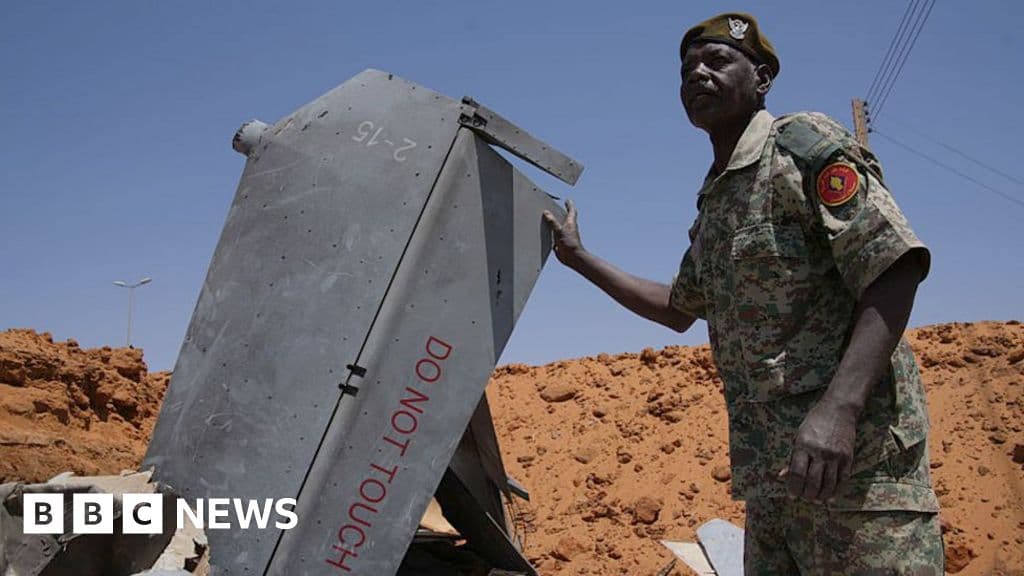
Sudan's el-Obeid city saw a drone strike on a funeral procession. At least four people were killed and several others injured in the attack, which was blamed on the Rapid Support Forces (RSF) by two rights groups, Sudan Doctors Network and Emergency Lawyers. The incident occurred at a cemetery in the city, which is currently under the control of the army.
The attack is part of a series of drone strikes that started on Wednesday evening, resulting in the deaths of at least 23 people, according to Emergency Lawyers. The group reported that drones also struck homes in a residential neighborhood, the airport district, and areas surrounding an army base, killing 13 civilians. Five civilians were killed in earlier attacks, and a driver of a lorry carrying food supplies died when his vehicle was struck on Thursday.
El-Obeid is a key battleground in Sudan's three-year civil war, which began after the leaders of the army and RSF fell out over the future direction of the country. The city is located in the oil-rich Kordofan region, which is divided into North, South, and West Kordofan states. The region is strategically significant, sitting between RSF-controlled areas in the west and eastern areas where the army is mostly in charge.
The fighting in Sudan has created the world's worst humanitarian crisis, with more than 11 million people forced from their homes and 28 million facing acute hunger. There are no reliable figures for the death toll, but it is thought to be at least 50,000. The systematic and repeated attacks on civilians in el-Obeid have been described by rights groups as tragic, with roofs of houses collapsing on occupants and entire families being killed.
Analysts say that whoever controls the Kordofan region effectively controls the country's oil supply, as well as a large chunk of the country. The RSF has not commented on the recent attacks, but the group has been accused of carrying out numerous human rights abuses during the conflict. The Sudanese government has been criticized for its handling of the crisis, with many calling for an end to the violence and a peaceful resolution to the conflict.
The international community has been slow to respond to the crisis in Sudan, with many countries focused on other global conflicts. However, the situation in Sudan is dire, and immediate action is needed to prevent further bloodshed and humanitarian suffering. The United Nations and other international organizations have called for a ceasefire and a peaceful resolution to the conflict, but so far, these calls have gone unheeded.
In the meantime, civilians continue to bear the brunt of the violence, with many forced to flee their homes and seek shelter in other parts of the country. The economic situation in Sudan is also dire, with inflation soaring and food prices skyrocketing. The country is heavily reliant on imports, and the conflict has disrupted supply chains, making it difficult for people to access basic necessities like food and medicine.
The conflict in Sudan is complex, with multiple parties involved and a long history of tension between the army and the RSF. The roots of the conflict date back to the country's independence in 1956, when the government was dominated by the northern region. The southern region, which is predominantly Christian, felt marginalized and excluded from power, leading to a long and bloody civil war.
In 2011, South Sudan gained independence, but the conflict in Sudan continued, with the army and the RSF vying for control of the country. The RSF, which was formed in 2013, is a paramilitary group that has been accused of numerous human rights abuses. The group has been supported by the government, but it has also been involved in clashes with the army, which has led to the current conflict.
The situation in Sudan is dire, and immediate action is needed to prevent further bloodshed and humanitarian suffering. The international community must come together to call for a ceasefire and a peaceful resolution to the conflict. The Sudanese government must also take steps to address the root causes of the conflict and work towards a more inclusive and equitable society. Only then can the country begin to rebuild and heal from the wounds of war.