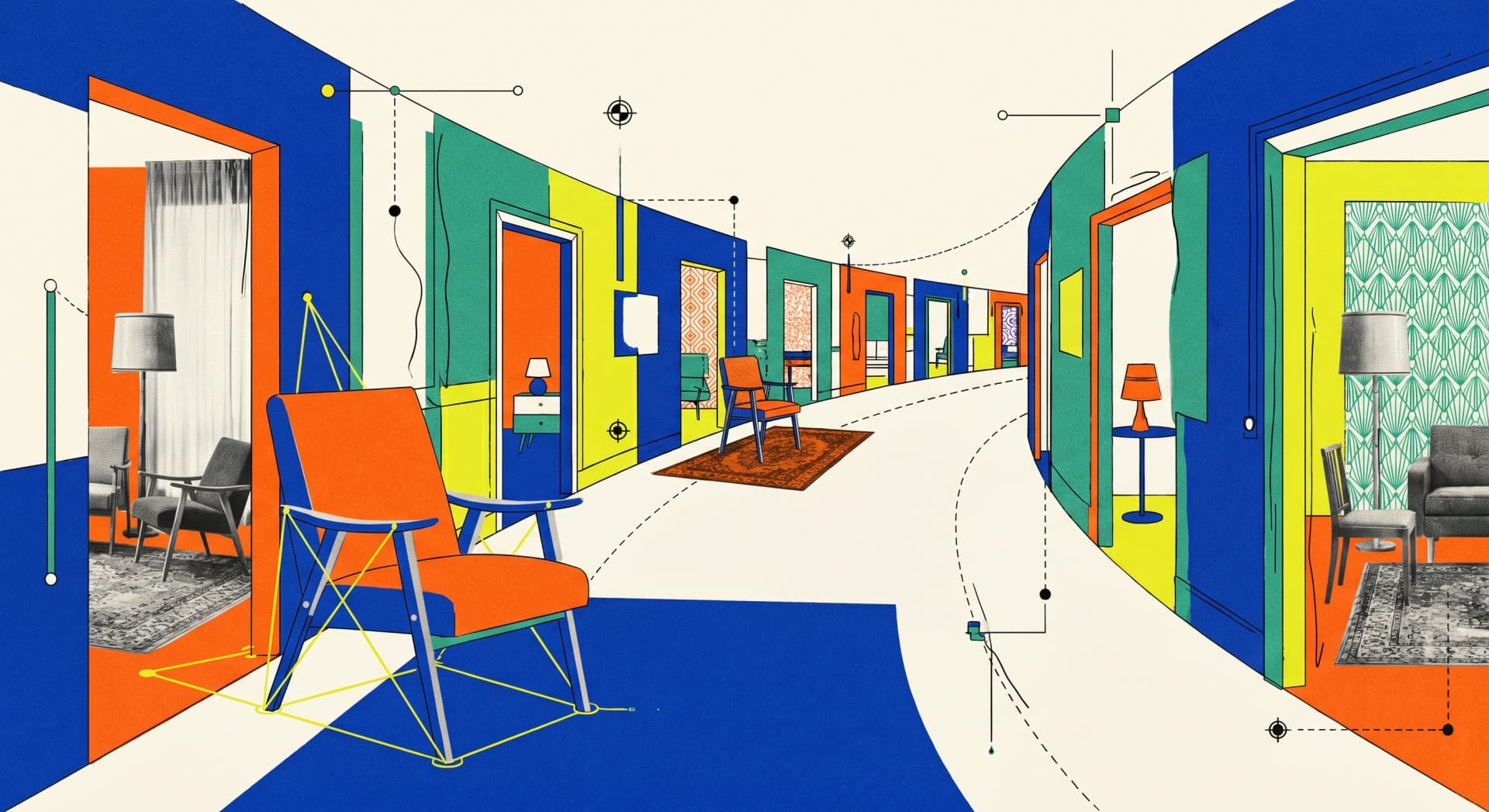
Microsoft researchers in collaboration with several universities have developed Mirage, a vi...
"Revolutionary tech remembers scenes, but struggles with moving objects, raising questions about its potential applications."
This innovative model stores scene information directly in latent space, significantly reducing compute time and graphics memory. The technology achieves this by bypassing traditional pixel-based point clouds, allowing it to maintain spatial consistency even during extended camera movements. However, it still faces challenges in reliably tracking moving objects across different segments, a limitation that could impact its effectiveness in various applications.
The development of Mirage is a notable step forward in the field of video generation, as it addresses a long-standing issue with traditional models: the inability to retain spatial memory. This limitation has hindered the creation of immersive and realistic video experiences, as scenes would often become disjointed or inconsistent when the camera panned or moved across the environment. By storing scene information in latent space, Mirage overcomes this hurdle, enabling the generation of more cohesive and engaging videos.
One of the key benefits of Mirage is its ability to reduce compute time and graphics memory. This is achieved through the use of latent space, which is a more efficient and compact way of representing scene information compared to traditional pixel-based methods. As a result, Mirage can operate with lower computational resources, making it more accessible to a wider range of applications and devices. Furthermore, the reduction in graphics memory requirements also enables the creation of more complex and detailed scenes, which can enhance the overall visual quality of the generated videos.
Despite its advancements, Mirage still faces significant challenges, particularly in tracking moving objects across different segments. This limitation is crucial, as it can affect the model's ability to generate realistic and coherent videos, especially in scenarios where objects are in motion. For instance, in a video depicting a cityscape, Mirage may struggle to track cars or pedestrians as they move across the scene, resulting in inconsistent or disjointed visuals. To overcome this limitation, the researchers will need to develop more sophisticated methods for tracking and predicting object motion, which can be a complex and daunting task.
The development of Mirage has significant implications for various industries, including film and video production, gaming, and virtual reality. In these fields, the ability to generate immersive and realistic video experiences is crucial, and Mirage's capabilities can help achieve this goal. For example, in film production, Mirage can be used to create more realistic and detailed environments, reducing the need for physical sets and location shooting. Similarly, in gaming and virtual reality, Mirage can enhance the visual quality and immersion of virtual environments, providing a more engaging and interactive experience for users.
The collaboration between Microsoft researchers and several universities is a testament to the growing importance of interdisciplinary research in the field of technology. By combining their expertise and resources, the researchers were able to develop a innovative solution that addresses a long-standing challenge in video generation. This collaboration also highlights the need for continued investment in research and development, as it can lead to breakthroughs and advancements that can transform various industries and aspects of our lives.
In conclusion, Mirage is a significant development in the field of video generation, offering a more efficient and effective way of creating immersive and realistic video experiences. While it still faces challenges, particularly in tracking moving objects, its capabilities have the potential to transform various industries and applications. As researchers continue to refine and improve Mirage, we can expect to see more sophisticated and realistic video experiences that push the boundaries of what is possible in the world of technology.