
Russia appears set to finally address long-term, serious space station cracks
"NASA and Roscosmos resolve a critical issue, averting a potential disaster. Tensions rose as astronauts sought emergency refuge."
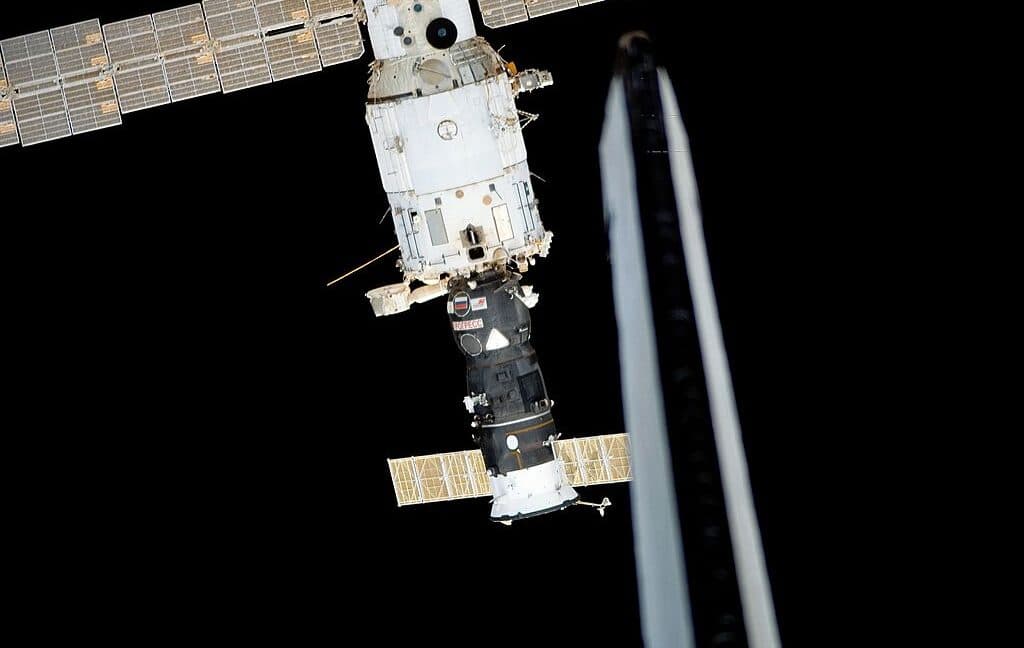
Russia has fixed the long-standing cracks in the International Space Station, according to sources. NASA astronauts living on the station had been directed to briefly seek emergency refuge in a Crew Dragon spacecraft ten days ago. The issue was with the PrK module, a small area attached to the Russian Zvezda service module, where persistent cracks had been ongoing since 2019.
The problem was due to corrosion, causing leaks to occur inside the aging transfer tunnel when pressure was cycled up or down. Russian cosmonauts had been attempting various fixes, including using a sealant called Germetall-1, but the leaks resumed in May and increased in early June. This prompted Roscosmos to begin work toward a more extensive inspection and structural repair effort on June 5.
A bland statement from Roscosmos offered no additional information, but the solution proposed by Russian officials on June 5 spooked NASA officials, prompting them to take the extreme step of securing their astronauts inside the Dragon spacecraft in case of a depressurization event on the space station. Later, Russia backed off, citing the need to conduct additional measurements and inspections of areas where leaks were occurring.
NASA strongly supported this decision, and as a result, Crew-12 and other astronauts ended their safe haven activities and returned to normal operations aboard the orbiting laboratory. Since then, there have been no official updates, but sources have revealed that the problem has been successfully fixed. The PrK module leads from the main area of the Russian segment of the space station to a docking port, and Russian cosmonauts must pressurize the tunnel to access the Progress spacecraft that dock there and unload and stow cargo on the vehicles.
The cracking issue in the PrK module's structure is due to corrosion, and leaks occur when pressure is cycled up or down. Although NASA has not publicly discussed the gravity of its concerns about the issue, the PrK module could break apart without much advance warning. Under pressure, the module could unzip and fail completely, a former astronaut and retired NASA official, Bob Cabana, described the issue in late 2024, saying, "NASA has expressed concerns about the structural integrity of the PrK and the possibility of a catastrophic failure."
This has been a persistent, behind-the-scenes dispute between NASA and Russian officials for years. Russia will say it has the situation under control, and then leak rates on the space station suggest otherwise. The new cracks discovered in early June brought the total to about 16. As leak rates rose, Russian officials informed NASA on June 4 of plans to attempt physical repairs to the new leaks with a drill and a "drill stop" device to prevent drilling all the way through the module's structure.
NASA officials were deeply concerned about this because Roscosmos had not shown them an analysis of the problem or explained why their procedures to address the leaks would work. The standoff continued into June 5, when Russian astronauts appeared to back off their plans, only to subsequently approach the PrK module with a saw and the intent to remove a load-bearing bracket. Meanwhile, Roscosmos officials continued to ignore communication with NASA officials on the ground.
At this point, NASA directed Crew 12 to secure themselves inside the Dragon spacecraft, a move that sent a strong message to the world that they disagreed with the proposed repair plan. The situation was critical, and the potential consequences of a catastrophic failure were dire. The International Space Station is a symbol of global cooperation in space exploration, but the incident highlights the challenges of working with different space agencies and the need for clear communication and cooperation.
The incident also raises questions about the long-term sustainability of the International Space Station. The station has been in orbit since 1998 and has been continuously occupied by astronauts since 2000. The station's modules are aging, and the maintenance and repair of the station are becoming increasingly complex. The incident with the PrK module is a reminder that the station requires constant maintenance and repair to ensure the safety of the astronauts on board.
In conclusion, the fixing of the cracks in the International Space Station is a significant development, and it highlights the importance of cooperation and communication between space agencies. The incident also raises questions about the long-term sustainability of the station and the need for clear planning and coordination to ensure the safety of the astronauts on board. As the space station continues to orbit the Earth, it is essential that the space agencies involved work together to address the challenges of maintaining and repairing the station, and to ensure that it continues to be a symbol of global cooperation in space exploration.


