NASA's X-59 reaches speed and altitude milestones ahead of first quiet supersonic flights
"NASA's X-59 plane is one step closer to flying over US communities, but will its "quiet sonic thump" be enough to win over residents."
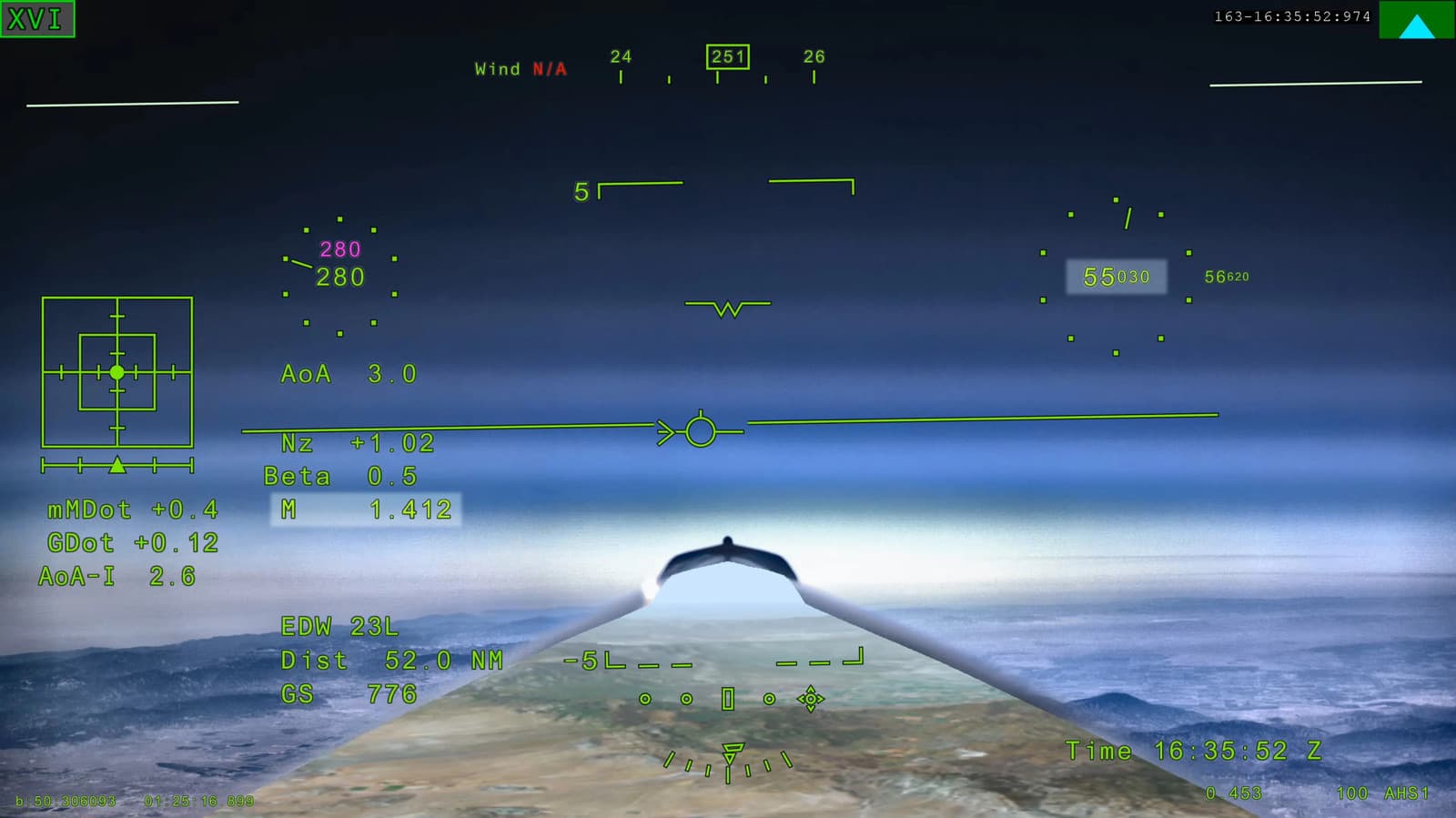
NASA's X-59 research plane is a experimental aircraft designed to fly at supersonic speeds without producing the traditional sonic boom. On a test flight on Friday, the X-59 flew at Mach 1.4, or about 924 mph, and reached an altitude of 55,000 feet, demonstrating its ability to reach the speed and altitude conditions required for its upcoming flights over US communities.
The X-59 is part of NASA's Quesst mission, which aims to develop a supersonic aircraft that can fly over land without producing a loud sonic boom. The plane is designed to produce a "quiet sonic thump" instead, which is expected to be much less disturbing to people on the ground. The Quesst mission is still months away, but the recent test flights have shown promising results.
The X-59's supersonic flight on Friday was a significant milestone for the project. The plane flew alongside another research craft that produces a sonic boom, which helped to obscure the noise made by the X-59 as it underwent testing. The test flight was an even more critical step than the previous one, as it hit key targets that will be replicated during the Quesst mission.
The Quesst mission will involve flying the X-59 over populated areas to gather feedback from the public on what the sonic thump sounds like to listeners on the ground. Before that, the plane will go through an acoustic validation phase, in which the team will measure its supersonic acoustic signature to ensure that it is indeed breaking the sound barrier without producing a traditional sonic boom.
The development of the X-59 has significant implications for the future of supersonic flight. If the plane is able to fly at supersonic speeds without producing a loud sonic boom, it could pave the way for the development of supersonic aircraft that can fly over land without disturbing people on the ground. This could lead to significant reductions in flight times and increases in efficiency, making supersonic flight a more viable option for commercial airlines and other operators.
The X-59 is a unique aircraft, with a long, slender design that is optimized for supersonic flight. The plane is powered by a single General Electric F414 engine, which produces 22,000 pounds of thrust. The X-59 has a top speed of over Mach 2, or about 1,500 mph, and can reach altitudes of up to 60,000 feet.
The Quesst mission is a key part of NASA's efforts to develop new supersonic aircraft. The agency has been working on the project for several years, and has made significant progress in recent months. The X-59 is one of several experimental aircraft being developed by NASA, and its success could have significant implications for the future of supersonic flight.
The recent test flights of the X-59 have been conducted at a research facility in California. The plane has been flying alongside another research craft, which produces a sonic boom, to help obscure the noise made by the X-59 as it undergoes testing. The test flights have been carefully planned and executed, with the X-59 flying at supersonic speeds for several minutes at a time.
The X-59's ability to fly at supersonic speeds without producing a loud sonic boom is due to its unique design. The plane has a special shape that is optimized for supersonic flight, with a long, slender fuselage and a sharp nose. The X-59 also has a special coating that helps to reduce the noise it produces, making it even quieter than traditional supersonic aircraft.
The Quesst mission is expected to begin in the near future, with the X-59 flying over populated areas to gather feedback from the public. The mission will be an important step in the development of supersonic aircraft, and could have significant implications for the future of flight. If the X-59 is able to fly at supersonic speeds without producing a loud sonic boom, it could pave the way for the development of supersonic aircraft that can fly over land without disturbing people on the ground.
The success of the X-59 could also have significant economic implications. Supersonic flight has the potential to revolutionize the airline industry, making it possible to fly from one side of the country to the other in just a few hours. This could lead to significant increases in productivity and efficiency, as well as reductions in travel times and costs.
In conclusion, the X-59 is a significant step forward in the development of supersonic aircraft. Its ability to fly at supersonic speeds without producing a loud sonic boom makes it an attractive option for commercial airlines and other operators. The Quesst mission will be an important test of the X-59's capabilities, and could have significant implications for the future of flight. If the X-59 is successful, it could pave the way for the development of supersonic aircraft that can fly over land without disturbing people on the ground, leading to significant reductions in flight times and increases in efficiency.