As global warming threatens corals, scientists search for reefs that can take the heat
"Record-breaking marine heat waves threaten global coral reefs, but some remain resilient. Can they help repopulate degraded reefs?"
Anne Cohen, a researcher at the Woods Hole Oceanographic Institution, navigates the Majuro lagoon in the Marshall Islands to study resilient coral reefs. Cohen's search for these coral strongholds may hold the key to repopulating more degraded reefs. Perched on the bow of an aluminum landing craft, she gazed a few yards ahead of the vessel toward a yellow robot gliding across the emerald Majuro lagoon. The unmanned surface vehicle, called Yellowfin, was quickly becoming one of the coral researcher’s most dependable guides in these Central Pacific waters.
Researchers say these coral strongholds may help repopulate more degraded reefs. Since 2023, record-breaking marine heat waves have swept through the tropics, fueling the most severe global coral bleaching event ever recorded. More than 80 percent of the world’s reefs have been impacted in at least 83 countries and territories. Corals have been so stressed by the extreme temperatures, they’ve expelled the tiny algae living inside their tissues that provide them with food and their brilliant hues, leaving them pale, ghostly and struggling to survive. Many have not recovered.
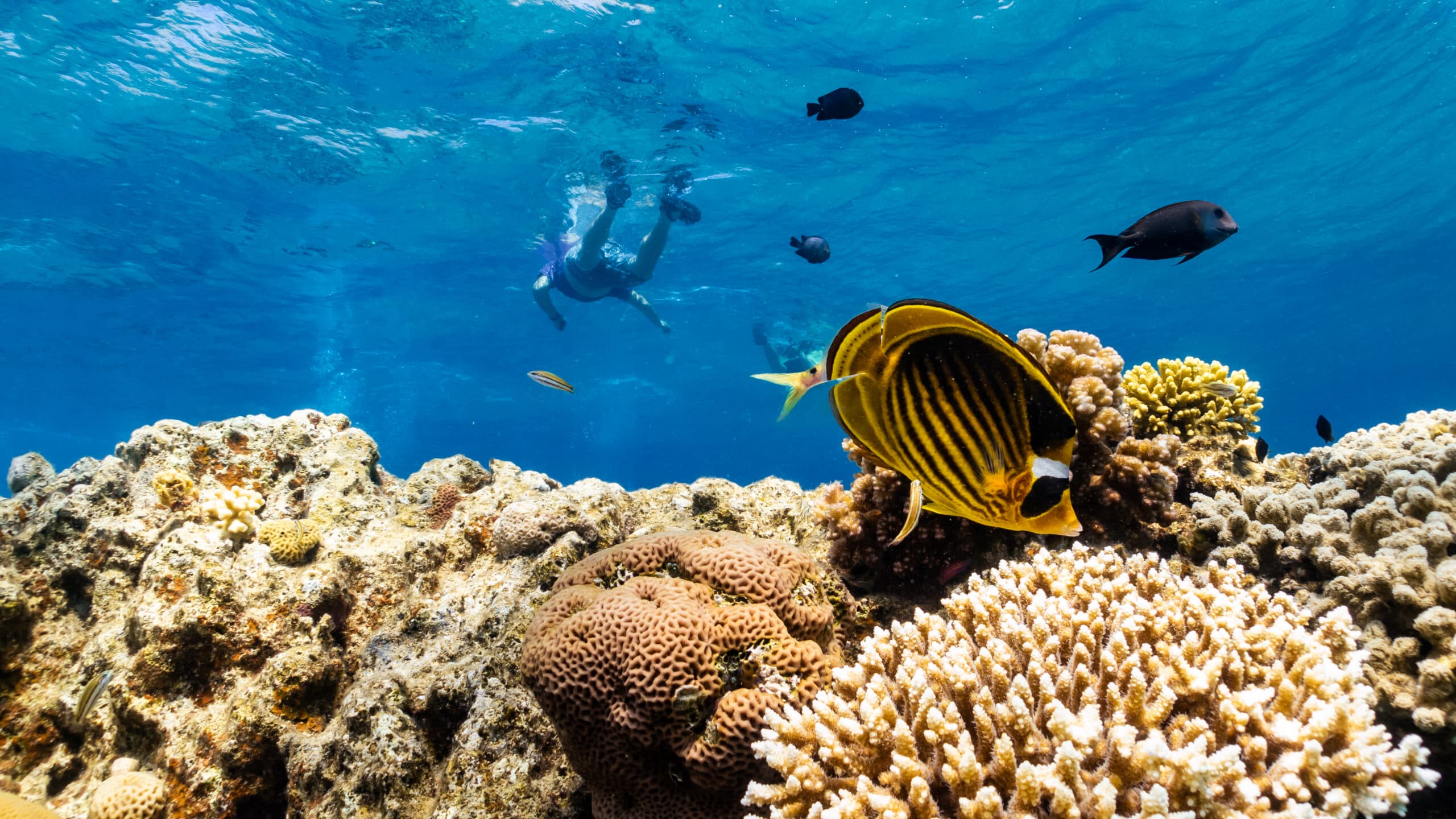
Cohen hoped the reef beneath her might be different. She yanked on her black and yellow snorkel fins, spit into her mask so it wouldn’t fog underwater and slid off the boat, her slight frame barely making a splash. Within seconds of peering into the blue, she let out a squeal muffled by her snorkel, astonished at the scene unfolding beneath her. Towering pinnacles of chestnut-colored tabletop corals rose from the sandy seafloor like trees, their broad plate-like canopies sheltering fish hiding in their shadows.
Dense thickets of staghorn corals stretched in every direction, their golden antler-like branches twisting across a sprawling reef extending as far as the eye could see, bursting with shades of mustard yellow, pink and lavender pastels. “It’s like a wonderland,” Cohen said, popping her head above the surface, beaming. “I feel like Alice.” In today’s oceans, the scene felt almost surreal, said Cohen, 62, who has spent the last 30 years studying coral reefs and the impacts of climate change on marine environments.
But it was a confirmation of something she had long believed: that even as hotter temperatures devastate coral reefs, some still possess an extraordinary ability to endure. She was determined to find out how. Unlocking the secrets behind their resilience, she said, could one day help scientists and conservationists restore, or even cultivate, reefs better equipped to survive a warming planet. Over the last decade, a significant part of Cohen’s research has focused on tracking down these reefs that are somehow defying the odds.
In 2018, she started a project dedicated to this search called Super Reefs, named after a number of reefs she’d encountered around the world that seemed to be thriving even while others nearby bleached or died. “We saw these corals that were behaving as if there was no heat wave at all,” she recalled. “I kind of felt like there was Superman or Superwoman coming in there and flexing their muscles, being super, super strong.” Three years later she launched a joint global initiative with The Nature Conservancy and Stanford University aimed at not only finding heat-tolerant communities, but also protecting them.
Even the hardiest of reefs are not invincible, she said. Coastal development projects such as ports or harbors that require dredging can bury corals beneath sediment. Agricultural runoff, sewage and plastic pollution introduce harmful pathogens and excess nutrients that spark coral disease or toxicity. The loss of these reefs would not only harm the environment but also the people who depend on them for food, livelihood, and protection from storms.
Cohen's research has significant implications for the future of coral reefs. If scientists can unlock the secrets behind the resilience of these Super Reefs, they may be able to develop new strategies for conserving and restoring degraded reefs. This could involve transplanting coral colonies from resilient reefs to degraded areas or using other techniques to enhance the heat tolerance of corals. The potential benefits of this research are enormous, and Cohen is hopeful that her work will contribute to the long-term survival of these vital ecosystems.
As the world continues to grapple with the challenges of climate change, the discovery of resilient coral reefs offers a glimmer of hope. These reefs are a reminder that even in the face of adversity, nature has the ability to adapt and thrive. By studying these Super Reefs, scientists like Cohen can gain a deeper understanding of the complex relationships between corals, their environments, and the impacts of climate change. This knowledge can be used to develop effective conservation strategies and protect these vital ecosystems for future generations.