The UK will scan asylum-seekers’ faces for age checks—despite knowing the tech is flawed
"Asylum seekers face life-altering errors due to flawed age checks. The UK's use of facial age estimation sparks concerns."
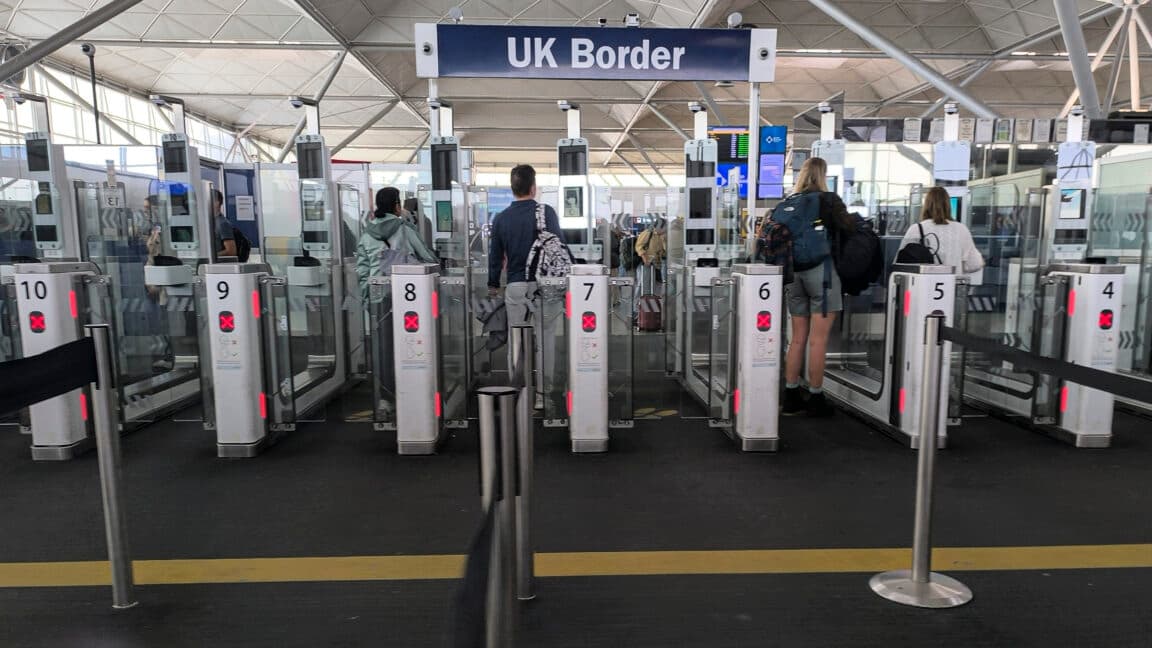
UK government officials will introduce facial age estimation technology at the country's border next year. The technology, which scans asylum seekers' faces to determine their age, has been found to be flawed in tests, posing significant risks to vulnerable individuals.
The move is part of a broader effort to modernize age verification processes, but critics argue that the technology is not reliable enough to be used in high-stakes scenarios. Many asylum seekers arriving in the UK do not have documents proving their age, and incorrect age assessments can have serious consequences, including the loss of legal protections and placement in adult-only detention centers.
An investigation by WIRED and Lighthouse Reports, in collaboration with The Independent, obtained an internal UK government report detailing tests of facial age estimation (FAE) technologies. The report shows that the systems regularly mistake children for adults and contain serious bias problems, particularly when assessing the ages of Sub-Saharan Africans. This group is the largest cohort of migrants entering the UK after crossing the English Channel in small boats, and had more age assessments raised in 2025 than any other region.
The leaked report found that the best-performing FAE algorithm tested by the Home Office performed significantly worse when estimating the ages of Sub-Saharan Africans compared to other groups. For female Sub-Saharan Africans, the age guessed by the system was off by an average of 4.6 years, meaning that a 13.5-year-old girl could be assessed as an 18-year-old adult. This raises serious concerns about the potential for life-altering errors and the impact on vulnerable individuals.
The Home Office disbanded a scientific committee designed to advise on broader age estimation methods while exploring the introduction of AI-powered facial age estimation. Tim Cole, an emeritus professor of medical statistics at University College London's Institute of Child Health and former committee member, describes the face scans as "hideously inaccurate." Cole and other committee members had sought to highlight the inadequacies of facial age estimation but were not given the opportunity to do so before the committee was shut down.
The use of FAE systems has been criticized by experts, who point to years of test results from the US National Institute of Standards and Technology showing that the accuracy of these systems often depends on the race of the person being analyzed and the quality of the photos taken. The Home Office claims to have "rigorous processes in place to verify an individual's age" and is working to modernize these processes through the testing of facial age estimation technology. However, the decision to deploy this technology despite its known flaws has sparked concerns about the potential consequences for asylum seekers.
The introduction of facial age estimation technology at the UK border is part of a broader trend of governments adopting anti-migrant policies and investing in surveillance technology. The second Trump administration and governments around the world are increasingly using technology to monitor and control the movement of people, often with little regard for the potential consequences or the rights of those being affected. The use of flawed facial age estimation technology in this context raises serious questions about the balance between national security and individual rights, and the need for more effective and reliable methods of age verification.
As the UK prepares to deploy facial age estimation technology at its border, it is clear that the potential consequences of this decision are far-reaching and potentially devastating. The use of flawed technology in high-stakes scenarios poses significant risks to vulnerable individuals, and the decision to deploy it despite these risks raises serious concerns about the priorities and values of the UK government. The introduction of this technology is a stark reminder of the need for more effective and reliable methods of age verification, and the importance of prioritizing the rights and dignity of all individuals, regardless of their nationality or immigration status.