
Knicks Shock Spurs in Finals Opener Behind Brunson's Heroics
"Jalen Brunson's clutch fourth-quarter performance silenced doubters as the Knicks overcame a 14-point deficit, setting the tone for a Finals series that could redefine both franchises."
Jalen Brunson scored 30 points, including 13 in the fourth quarter, as the New York Knicks rallied from a 14-point deficit to defeat the San Antonio Spurs 105-95 in Game 1 of the NBA Finals on Wednesday.
This wasn't just another playoff victory. It was a statement. The Knicks, perennial underachievers for decades, seized control of the championship narrative by dismantling the Spurs' vaunted defense when it mattered most. In a series where the spotlight rightfully belonged to generational talent Victor Wembanyama, it was Brunson who delivered the knockout blow, proving that championship pedigree isn't always measured in draft position.
The first half played out as a chess match between two contrasting basketball philosophies. The Knicks, riding the coattails of their regular-season success, attempted to establish their physical brand of basketball early. Brunson, who left the game temporarily with a knee injury after a collision with Harrison Barnes, returned to spark an 8-2 run that gave New York a brief 14-7 lead. Yet San Antonio responded with characteristic precision, leveraging their spacing and ball movement to surge ahead. Julian Champagnie's consecutive three-pointers exemplified the Spurs' ability to punish defensive breakdowns, a recurring theme that built their 14-point third-quarter advantage.
The turning point occurred in the final minutes of the third quarter when Wembanyama, who had already shown signs of fatigue, took a knock to his knee. This moment, perhaps coincidental, became the psychological fulcrum of the game. The Knicks, sensing vulnerability, unleashed a 12-2 run that bridged the third and fourth quarters, cutting the deficit to single digits. While Wembanyama returned to the floor, the momentum had irrevocably shifted.
Brunson's fourth-quarter performance transcended statistics. His 13 points weren't merely points; they were dagger after dagger delivered with the poise of a veteran championship guard. His step-back three-pointer with 4:32 remaining that gave the Knicks an 86-81 lead wasn't just a basket—it was a declaration. On the subsequent possession, he absorbed contact and converted a three-point play, extending the lead to eight. These weren't just individual plays; they were manifestations of the Knicks' newfound mental fortitude.
What made this victory particularly significant was the Knicks' ability to maintain their composure under pressure. Down by double digits with less than five minutes remaining, they didn't force the issue or abandon their principles. Instead, they leaned into their identity: defense, rebounding, and Brunson's brilliance in the clutch. OG Anunoby's back-to-back threes weren't merely shots; they were manifestations of a team trusting its collective strength over individual heroics.
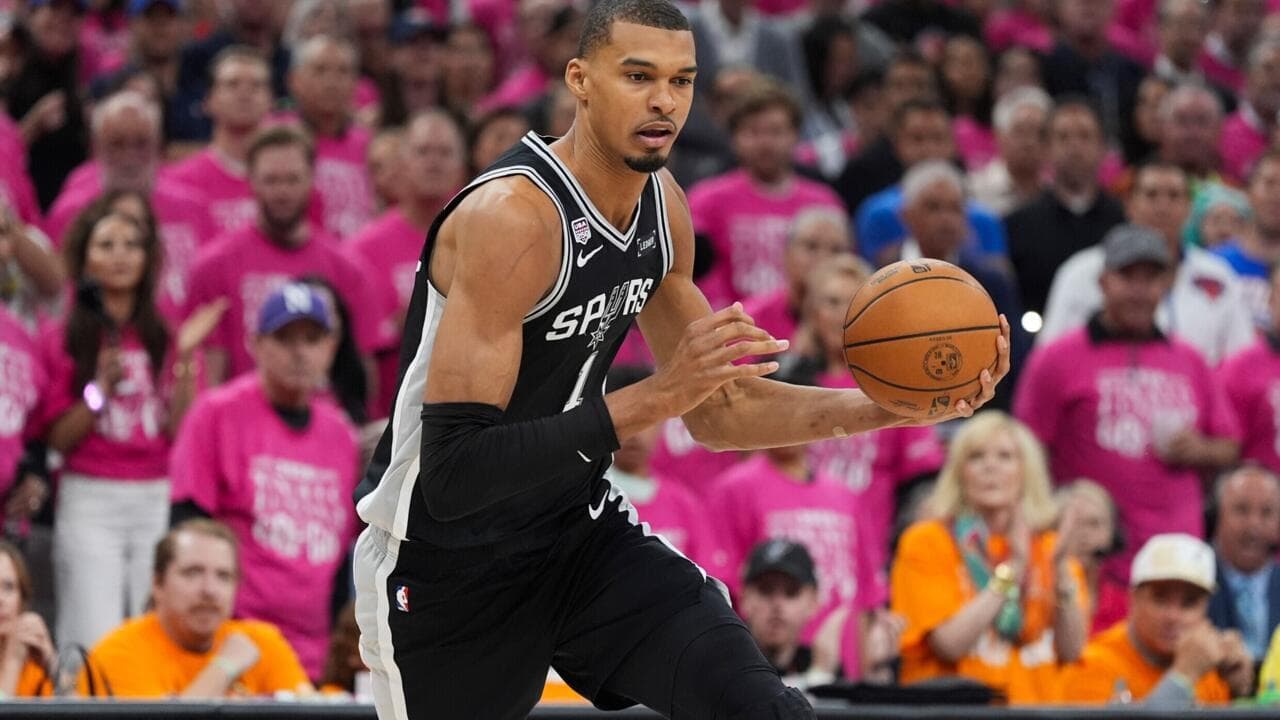
Wembanyama's performance, while statistically impressive (26 points, 12 rebounds), revealed critical vulnerabilities that the Spurs must address. His 6-of-21 shooting wasn't merely off night; it was a product of defensive adjustments that exploited his tendency to force difficult shots against length. The Knicks' strategy of switching aggressively on screens and collapsing the paint effectively limited his impact in the crucial moments. His assertion that "nerves weren't a factor" may be technically true, but the pressure of the Finals stage undoubtedly affected his decision-making in ways that will require strategic recalibration.
For San Antonio, this defeat represents more than just a series deficit. It exposes a fundamental question about their championship trajectory: Can a team built around a transcendent individual talent overcome the collective experience and cohesion of a veteran-led squad? The Spurs' young core—Stephon Castle, Dylan Harper, Julian Champagnie—showed flashes of brilliance but lacked the consistency needed to counter the Knicks' resilience. Their 38.5% shooting from beyond the arc, while respectable, simply wasn't sufficient against a team that thrives on defensive intensity.
The broader implications of this contest extend far beyond this series. For the Knicks, this victory represents the culmination of a multi-year rebuild that has transformed them from perennial doormats to legitimate contenders. Their balanced scoring attack, with four players in double figures, demonstrates the depth and versatility that championship teams possess. Brunson's emergence as a legitimate superstar on the biggest stage validates the franchise's decision to build around him rather than pursue more glamorous alternatives.
For the NBA, this Finals matchup offers a fascinating contrast between old-guard and new-guard philosophies. The Knicks represent the traditional values of defense, toughness, and experience—principles that have defined championship teams for decades. The Spurs embody the modern analytics-driven approach that prioritizes spacing, three-point shooting, and maximizing individual talent. Game 1 suggested that experience and cohesion may still trump talent when the stakes are highest.
As the series shifts to New York for Game 2, the narrative has undeniably shifted. The Knicks' confidence is palpable, while the Spurs must quickly adjust their approach or risk falling into an insurmountable hole. The x-factor may lie in Wembanyama's ability to evolve his game against the Knicks' defensive schemes—a test of his adaptability that could define his legacy.
In a league increasingly dominated by super teams and star-driven narratives, the Knicks' victory serves as a reminder that collective identity still matters. This series may ultimately be remembered as the moment when two franchises with vastly different paths collided, with the Knicks proving that resilience and chemistry can triumph over raw talent, at least for one night. What happens next remains to be seen, but Game 1 has established one undeniable truth: the Knicks believe they belong on this stage, and they're willing to do whatever it takes to prove it.
