
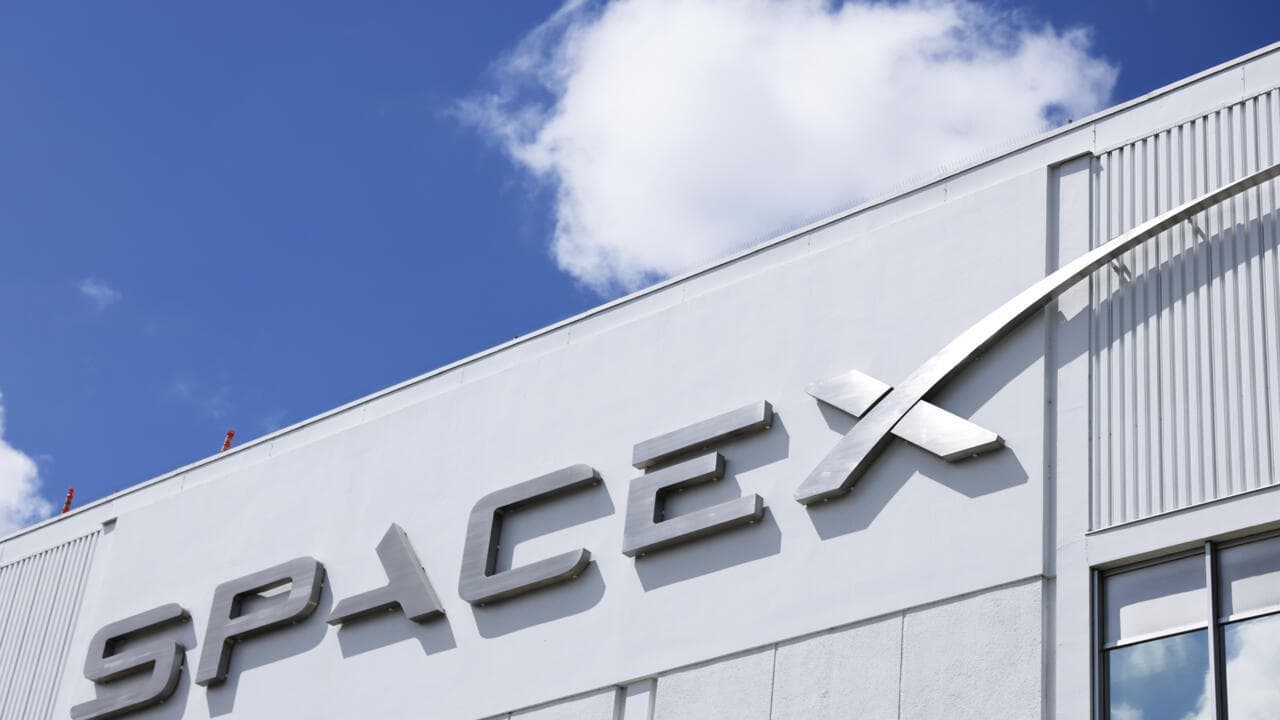
SpaceX Slams Record $75 Billion IPO Valuing Musk Empire at $1.7 Trillion
"Mars ambitions and satellite dominance drive unprecedented valuation, but investors question whether SpaceX can deliver on interplanetary promises while maintaining profitability in Earth-based markets."
SpaceX revealed plans Wednesday for a record $75 billion IPO that values Elon Musk's space empire at $1.765 trillion, surpassing all previous fundraising milestones in corporate history. The offering—555.6 million shares priced at $135 each—would vault the company past Saudi Aramco's 2019 record of $25.6 billion and potentially make Musk humanity's first trillionaire based on his stake in the company.
The astronomical valuation reflects Wall Street's extraordinary faith in Musk's ability to transform science fiction into commercial reality. Yet industry analysts express skepticism about whether SpaceX can deliver on its audacious timeline to establish a human colony on Mars while maintaining profitability in terrestrial markets. "We're witnessing the most aggressive bet on future technologies ever," says aerospace analyst Dr. Sarah Jenkins. "But the question remains whether the market is pricing in decades of R&D or viable near-term revenue streams."
Starlink, SpaceX's satellite internet division, currently provides 10.3 million subscribers across 164 markets with "fast and relatively affordable access." This division has emerged as a critical revenue source for the capital-intensive company, funding its more ambitious projects like the Mars colonization program. The service gained geopolitical significance during conflicts in Ukraine and Iran, demonstrating how space-based communications can reshape modern warfare and protest movements. Yet the division faces increasing competition from emerging players like Amazon's Project Kuiper and OneWeb, potentially limiting growth projections.
NASA's Artemis program represents another pillar of SpaceX's public profile. While not directly involved in the recent Artemis II lunar flyby, the company is designing lunar landers for future missions. NASA hopes to test an in-orbit rendezvous with these landers in 2027, with a human landing potentially following in 2028. This government partnership provides both funding and legitimacy to SpaceX's commercial operations, creating a symbiotic relationship that few private companies have achieved with federal agencies.
The potential merger with Tesla, increasingly focused on robotics and autonomous transportation, adds another dimension to SpaceX's valuation. The companies already collaborate on Terafab, a massive semiconductor manufacturing plant. "We're witnessing the consolidation of Musk's vision across multiple technological frontiers," explains tech economist Michael Chen. "The question investors must ask is whether these synergies create efficiencies or simply dilute focus."
Musk's retention of over 80% voting power despite the IPO raises governance concerns typical of founder-led companies. This structure allows him to pursue long-term, potentially unprofitable projects like Mars colonization without short-term shareholder pressure. However, it also concentrates risk in a single visionary whose ambitious timelines have frequently shifted. The massive bonus tied to colonizing Mars with one million inhabitants—currently viewed as science fiction by most experts—further underscores the speculative nature of this valuation.
The IPO comes at a pivotal moment for the commercial space industry. Blue Origin, Jeff Bezos's competing venture, continues to develop its own lunar lander and suborbital tourism capabilities. Meanwhile, traditional aerospace giants like Boeing and Lockheed Martin adapt to an increasingly privatized space landscape. "SpaceX has fundamentally reshaped the economics of space exploration," notes former NASA administrator Robert Lightfoot. "But the question remains whether the private sector can sustain the kind of long-term commitment required for truly interplanetary travel."
Retail investors face another significant challenge: by the time SpaceX shares become available to the public, much of the anticipated gains may already have been captured by institutional investors. This pattern repeated itself with other high-profile IPOs, creating a "two-tiered" market where early backers reap extraordinary returns while latecomers face uncertain prospects.
The valuation also reflects broader market dynamics in technology investing. With interest rates potentially stabilizing after years of hikes, investors increasingly turn to high-growth, high-risk propositions. SpaceX sits at the nexus of several transformative trends: space commercialization, satellite communications, and reusable rocket technology. Yet the company's finances remain closely guarded, leaving analysts to piece together revenue models from limited public disclosures.
Mars colonization remains the ultimate justification for SpaceX's valuation. Musk describes the endeavor as essential for "the long-term survival of the human race," a bold claim that resonates with some investors while appearing fantastical to others. The company has tied executive compensation to achieving this milestone, creating powerful incentives to pursue what remains an extraordinarily ambitious goal.
For all the fanfare surrounding the IPO, SpaceX must still navigate significant technical and financial hurdles. Reusable rocket technology has reduced launch costs dramatically, but Mars missions present orders-of-magnitude greater challenges. The company would need to develop entirely new capabilities in life support, radiation shielding, and in-space manufacturing to make interplanetary colonization viable.
The IPO represents perhaps the most ambitious bet in modern financial markets—a wager that a single company can simultaneously revolutionize space exploration, satellite communications, and potentially automotive technology through strategic mergers. Whether this valuation reflects visionary genius or market exuberance may remain unclear for years, as SpaceX's ultimate success will be measured not in quarterly earnings reports, but in whether humans eventually walk on Mars.

