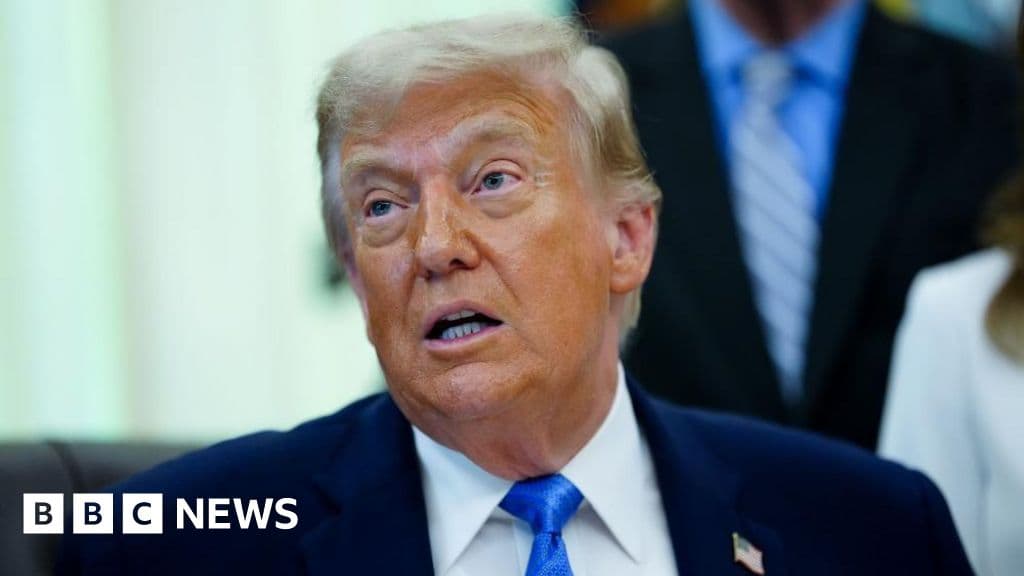
Trump ordered new attacks on Iran after Tehran delayed talks.
"Tensions escalate as Iran retaliates against US assets."
Iran's reluctance to negotiate sparked Trump's aggressive stance. The US launched airstrikes on Iranian targets, marking a significant escalation in the conflict. The situation unfolded rapidly, with Iran firing back at Gulf States and Jordan. Trump's decision to attack Iran was reportedly prompted by frustration over the delayed talks. The US president had been waiting for a response from Iranian officials, but Tehran's slow pace angered him. Consequently, Trump instructed the military to prepare for a second day of strikes against Iran. The attacks targeted key Iranian installations, including military bases and strategic facilities. Iran retaliated by launching missiles at US assets in three countries, prompting Trump to vow that Iran would "pay the price." The crisis has sparked concerns about regional stability and the potential for a wider conflict. The US has been trying to negotiate a new deal with Iran, but the talks have stalled. Trump's administration has imposed tough sanctions on Iran, crippling its economy. The Iranian government has refused to back down, leading to a stalemate in the negotiations. The latest escalation has raised fears of a military confrontation between the US and Iran. Experts warn that such a conflict could have disastrous consequences for the region and the global economy. The US has deployed additional troops to the Middle East, citing concerns about Iranian aggression. The situation remains volatile, with both sides engaging in a war of words. Trump's aggressive rhetoric has been matched by Iranian leaders, who have vowed to defend their country against any attack. The international community has called for calm and restraint, urging both sides to return to the negotiating table. However, the prospects for a peaceful resolution seem remote, given the deep-seated tensions between the US and Iran. The conflict has significant implications for global security and the future of the Middle East. As the situation continues to unfold, one thing is clear: the world is watching with bated breath, hoping that a catastrophic war can be averted. The US and Iran have a long and complex history, with periods of tension and conflict punctuated by brief moments of diplomacy. The current crisis is the latest chapter in this saga, with the potential to shape the future of the region. The US has historically taken a tough stance on Iran, imposing sanctions and supporting opposition groups. Iran, on the other hand, has sought to assert its influence in the region, often challenging US interests. The conflict between the two nations is fueled by a mix of geopolitical, economic, and ideological factors. The US sees Iran as a threat to regional stability, while Iran views the US as a bully seeking to impose its will. This fundamental disagreement has led to a cycle of escalation, with both sides engaging in a high-stakes game of chicken. The current situation is particularly dangerous, given the risk of miscalculation and unintended consequences. The US and Iran are not the only players in this drama, with other nations and interests at stake. The Gulf States, Jordan, and other countries in the region are caught in the middle, trying to navigate the treacherous waters of the conflict. The international community has a critical role to play in resolving the crisis, but so far, its efforts have been limited. The United Nations and other organizations have called for calm and restraint, but their words have fallen on deaf ears. The US and Iran seem determined to pursue their respective courses, regardless of the cost. As the situation continues to deteriorate, the world waits with bated breath, hoping that somehow, someway, a peaceful resolution can be found. The alternative is too terrible to contemplate: a war that could engulf the region, causing untold suffering and destruction. The clock is ticking, and the stakes are high. The world can only hope that sanity will prevail, and that the US and Iran will find a way to resolve their differences peacefully. The future of the region, and indeed the world, depends on it. In the end, it is up to the leaders of the US and Iran to choose between war and peace. The world can only watch and wait, hoping that they will choose wisely.