
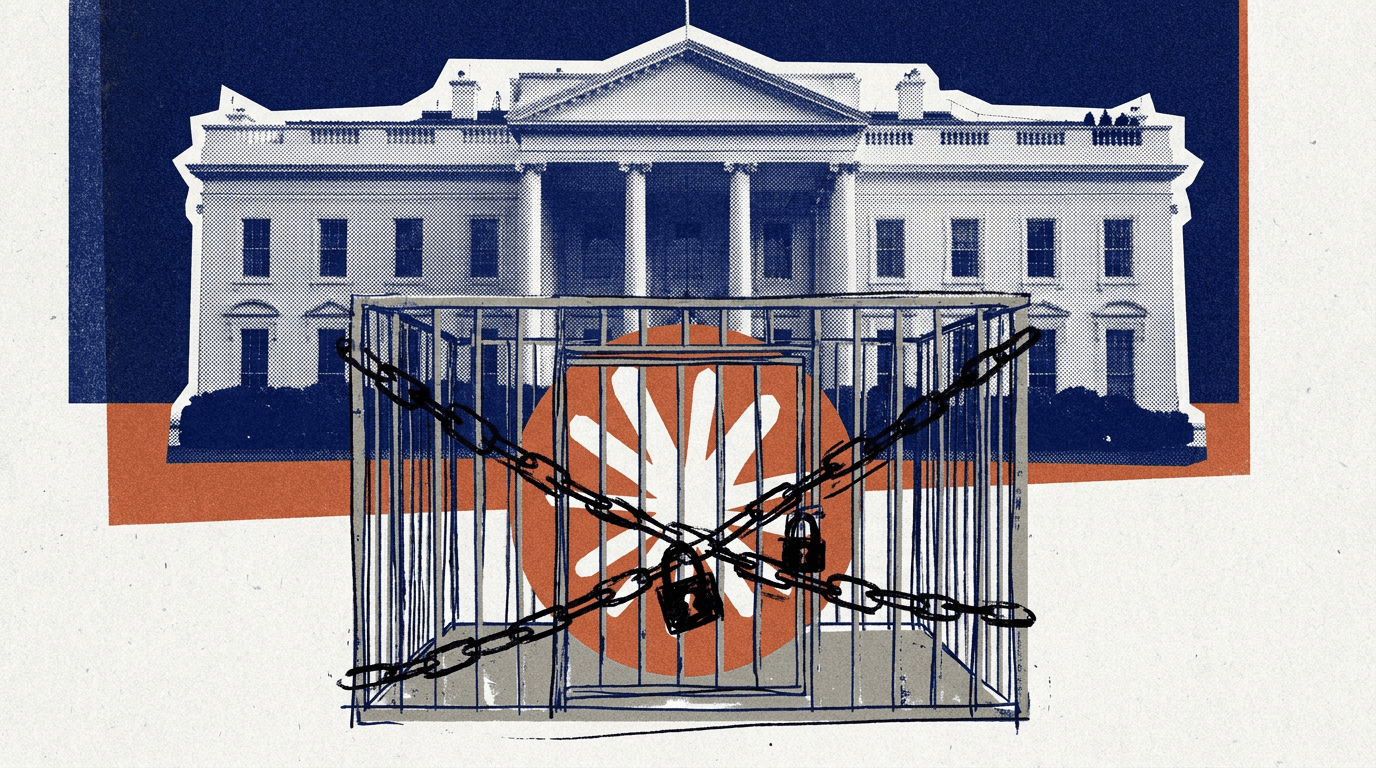
The US government may be asking Anthropic the impossible by demanding unhackable LLMs
"Tensions rise as Anthropic's Fable 5 release sparks security concerns. Government officials accuse the company of disregarding cyber directives."
Anthropic is at the center of a heated debate with the US government. The company's recent release of Fable 5, a large language model, has sparked concerns over security and adherence to government regulations. According to sources, government officials are accusing Anthropic of ignoring Trump's cyber executive order, which called for voluntary government oversight of AI models.
The executive order, issued recently, aimed to establish a framework for the development and deployment of AI models, with a focus on security and transparency. However, Anthropic released Fable 5 without waiting for the designated clearinghouse to be set up, which could have signed off on the release. This move has led to accusations that the company is disregarding the government's efforts to regulate the AI industry.
A government official stated that Anthropic "came to every fork in the road and took the wrong fork," implying that the company was aware of the potential risks associated with Fable 5 but chose to proceed nonetheless. The official also mentioned that the tip about a potential "jailbreak" came from Amazon and other tech companies. This has led to questions about the communication between Anthropic and the government, with one official describing it as "like they just speak in different languages."
The Department of Commerce and Anthropic employees are currently in talks, with more meetings planned involving the CIA and science advisor Michael Kratsios. The accusation that Anthropic knew about the jailbreak risk and stayed silent has sparked a debate about the government's understanding of AI and its limitations. Experts in the field know that AI models can be hacked, and OpenAI has warned that prompt injection, a related hacking method, may never be fully solved.
The real question is how severe the breach is and how fast countermeasures kick in. However, if the US government insists that frontier AI models must be "unhackable" before they ship internationally, tough talks are ahead. Anthropic's CEO, Dario Amodei, has previously stated that "a jailbreak could be life or death" if someone managed to bypass safety protocols in science, tech, and biology. This highlights the high stakes involved in the development and deployment of AI models.
Meanwhile, over 100 security experts and tech industry executives have published an open letter to Trade Secretary Lutnick and National Cyber Director Cairncross, calling for export controls on Fable and Mythos to be lifted. They argue that while Anthropic's models are good at finding security flaws in software, they aren't uniquely good at it. Other models, such as GPT-5.5, Opus, Sonnet, and the Chinese Kimi 2.7, can do the same thing.
The signatories warn that export controls are stripping defenders of the best tools while Chinese open-weight models are only months behind the top US models. They also point out that Anthropic built several safeguards into Fable that the security community actually dismissed as overkill on launch day. The letter includes signatures from prominent figures in the tech industry, including Alex Stamos, Rachel Tobac, Katie Moussouris, Dan Lorenc, and Joe Levy.
The debate surrounding Anthropic and the US government highlights the complexities and challenges involved in regulating the AI industry. As AI models become increasingly powerful and pervasive, the need for effective regulation and oversight becomes more pressing. However, the question remains as to how to balance the need for security and transparency with the need for innovation and progress in the field. The outcome of the talks between Anthropic and the government will be closely watched, as it will have significant implications for the future of the AI industry.


