MIT affiliates win 2026 Hertz Foundation Fellowships
"Four MIT affiliates receive prestigious fellowships to pursue groundbreaking research, advancing science and technology frontiers with autonomy and..."
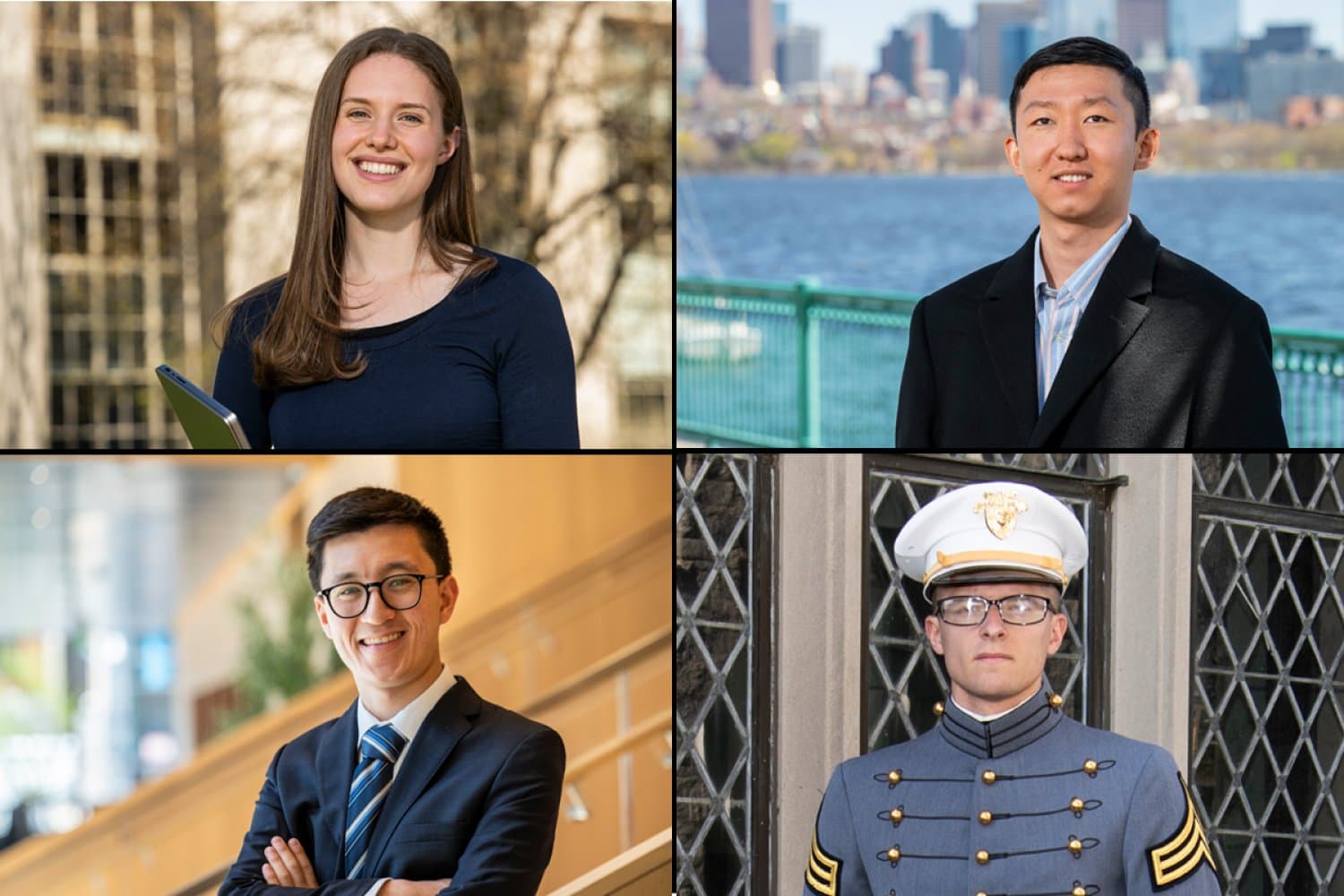
MIT affiliates Annika Marschner, Alvin Q. Meng, Zachary S. Siegel, and Matthew Wanta won 2026 Hertz Foundation Fellowships. The Hertz Foundation announced the awards, providing each recipient with five years of financial support to pursue innovative research. The fellowships offer a stipend and full tuition equivalent, allowing the students to work on groundbreaking projects without financial constraints. Philip Welkhoff, a Hertz Fellow and director of the malaria program at the Gates Foundation, co-led the selection process and praised the recipients for their fearlessness and creativity. The Hertz Fellowship is a prestigious science and technology award that has been given to over 1,300 fellows since its establishment in 1963. The fellowship provides not only financial support but also lifelong access to Hertz Foundation programs, including events, mentoring, and networking opportunities. These connections have led to collaborative startups, research, and commercialization in various fields, including advanced medical therapies and global defense networks. The 2026 MIT-affiliated recipients are among a total of 19 Hertz Foundation Fellows selected from across the United States. Annika Marschner, a mechanical engineering major, will begin her PhD at MIT in the fall, focusing on the development of novel technologies for biointerfacing and bio-inspired systems. Her undergraduate research included the development of a custom benchtop stereoscope-compatible incubator and extrusion-based desktop bioprinter. Marschner's work has the potential to improve the speed and dexterity of dynamic motions in bio-inspired robotic limbs, which could lead to advancements in assistive medical technology and surgical robotics. Alvin Q. Meng, a doctoral student in inorganic chemistry, is studying iron-sulfur clusters under the guidance of Professor Daniel L.M. Suess. Meng's research involves the synthesis and characterization of dihapto-coordinated tungsten complexes of cyclopentadiene, which could lead to a better understanding of chemical structure and reactivity. Zachary S. Siegel, an electrical engineering and computer science graduate student, is pursuing a PhD in the Computer Science and Artificial Intelligence Laboratory. Siegel's research focuses on the intersection of robotics, cognitive science, and artificial intelligence, with a goal of understanding how humans infer the goals of others in open-ended environments. The Hertz Fellowship will provide these students with the freedom to innovate and pursue their research without financial constraints, allowing them to make significant contributions to their fields. The implications of their research are far-reaching, with potential applications in fields such as medicine, technology, and engineering. As the recipients begin their research, they will have the opportunity to collaborate with other Hertz Fellows and access a network of professionals in their fields. The Hertz Foundation's commitment to supporting innovative research and providing opportunities for collaboration and networking will likely lead to breakthroughs and advancements in science and technology. In the coming years, the research conducted by these students has the potential to lead to significant advancements in various fields, improving lives and shaping the future. The Hertz Fellowship is a testament to the importance of supporting innovative research and providing opportunities for talented individuals to pursue their passions. As the recipients of the 2026 Hertz Foundation Fellowships, Annika Marschner, Alvin Q. Meng, Zachary S. Siegel, and Matthew Wanta are poised to make a significant impact in their fields, and their research has the potential to change the world.