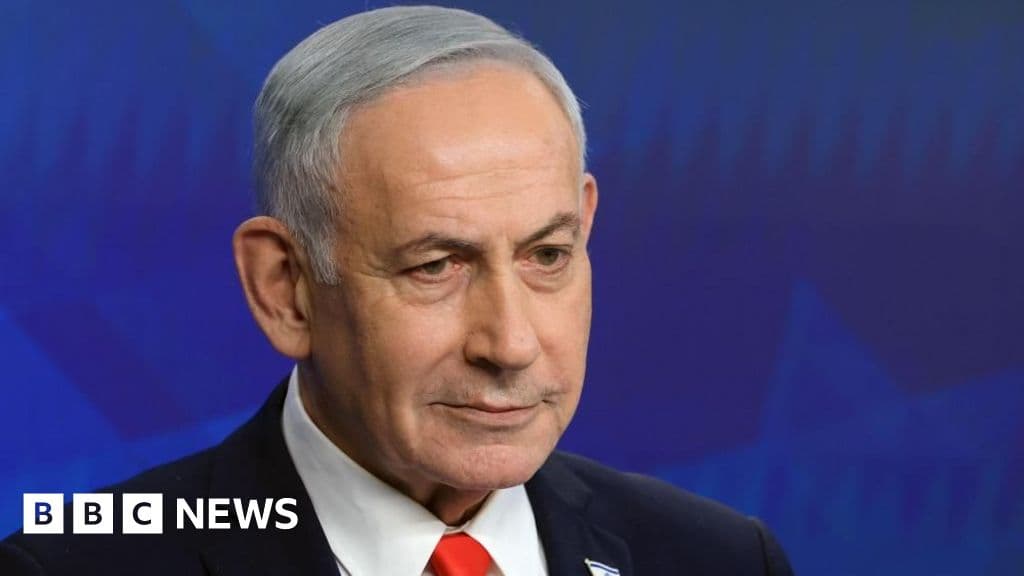
Iran deal presents political nightmare for Netanyahu
"Israel's security policy is under scrutiny as Netanyahu navigates a complex geopolitical landscape, facing opposition from within and outside his party."
Israel's Prime Minister Benjamin Netanyahu is grappling with a daunting political challenge following the US ceasefire agreement with Iran. Netanyahu, who has built his career on a hardline stance against Iran, now finds himself at odds with his key US ally. The agreement has left him facing a difficult decision: either confront the US directly or surrender Israeli interests.
The US-Iran ceasefire deal has sparked widespread criticism in Israel, with many questioning the implications for the country's security. Netanyahu's opponents have seized on the opportunity to attack his handling of the situation, with opposition leader Yair Lapid stating that the prime minister is faced with a choice between "a direct and destructive confrontation with our greatest ally, or a submissive surrender of Israeli interests."
Netanyahu has long positioned himself as a strong leader on security issues, but the current situation has put his reputation to the test. The US president's expletive-laden assessment of Netanyahu's judgment has been widely reported, and the prime minister's own party members are speaking out against the agreement. Far-right national security minister, Itamar Ben-Gvir, has stated that "Trump's agreement does not bind us" and that Israel will continue to protect itself, even if it means going against the US.
The demand from Tehran that the ceasefire covers "military operations on all fronts, including Lebanon" has been met with resistance from Israel. Netanyahu has insisted that Israel will not withdraw from its buffer zone in Lebanon and will maintain its operational freedom to respond to threats. However, the US and Iran have made it clear that they expect Israel to cease its attacks on Hezbollah in Lebanon, a condition that Netanyahu is unlikely to accept.
Former Mossad official and Iran specialist, Sima Shine, has expressed concern over the implications of the agreement, stating that it gives Iran the possibility to continue supporting Hezbollah and maintain its influence in Lebanon. "It's difficult to understand why the Americans accepted it," she said. "By allowing Iran to decide what will happen in Lebanon, the US is giving Iran the possibility to continue to support Hezbollah, and to make sure that Hezbollah is a major political actor in the Lebanese arena."
As the situation continues to unfold, Netanyahu is under pressure from all sides. His own party members are questioning his handling of the situation, and opposition leaders are calling for him to take a stronger stance against the US and Iran. The prime minister's response to the crisis will have significant implications for Israel's security and his own political future.
Netanyahu has devoted most of his adult life to preventing Iran from obtaining nuclear weapons, and he has made it clear that he will do whatever is necessary to achieve this goal. However, the current situation has put him in a difficult position, and he must navigate a complex web of alliances and rivalries to protect Israel's interests.
The US ceasefire agreement with Iran has presented Netanyahu with a political nightmare, and his response will be closely watched by allies and adversaries alike. As the prime minister navigates this challenging situation, he must balance his commitment to Israel's security with the need to maintain good relations with the US. The outcome will have significant implications for the region and Netanyahu's own political future.
In the coming weeks and months, Netanyahu will face intense scrutiny over his handling of the situation. His opponents will continue to attack his judgment and question his ability to lead the country, while his own party members will push him to take a stronger stance against the US and Iran. The prime minister's response to the crisis will be a defining moment in his career, and it will have significant implications for Israel's security and his own political legacy.
As the situation continues to evolve, one thing is clear: Netanyahu is facing a daunting political challenge, and his response will have far-reaching consequences for Israel and the region. The prime minister's ability to navigate this complex geopolitical landscape will be put to the test, and his decisions will shape the course of Israel's history.