Russian artist and Putin critic shot dead in Poland
"A Russian artist's execution-style murder sparks outrage and raises questions about Kremlin involvement. Polish authorities scramble for answers."
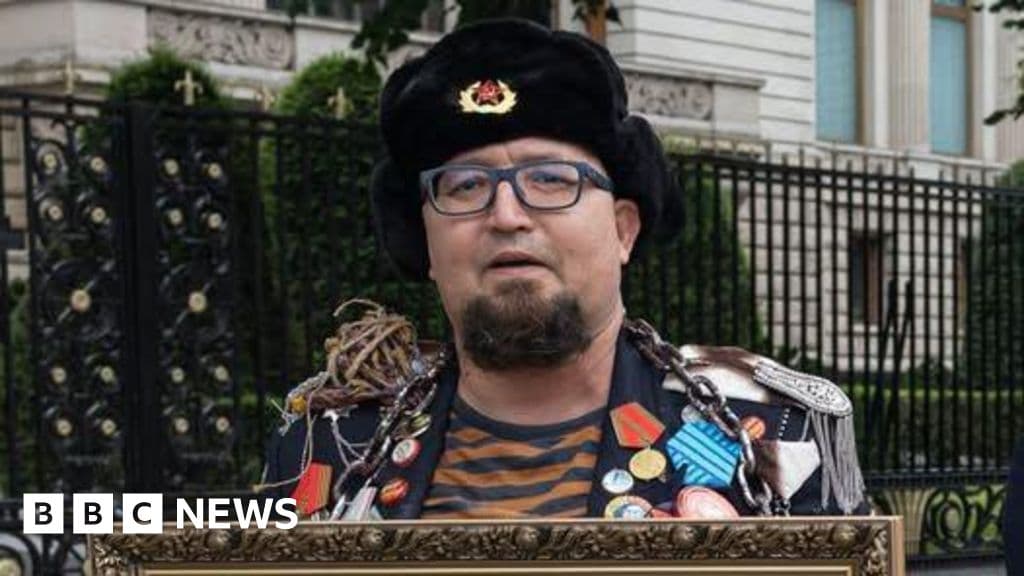
Robert Kuzovkov, a 44-year-old Russian artist, was shot dead in Biała Podlaska, Poland, on Monday morning. Known by his pseudonym Semyon Skrepetsky, he was a vocal critic of President Vladimir Putin.
Skrepetsky's murder has sent shockwaves through the artistic community and sparked widespread condemnation. Polish prosecutors are investigating the killing, which occurred in a car park approximately 600m from the Belarusian consulate. The artist was shot five times in the head, chest, and back.
According to Marcin Kozak, spokesman for the District Prosecutor's Office in Lublin, an unidentified gunman approached Skrepetsky and fired two shots. When the victim fell to the ground, the perpetrator fired three more shots before fleeing the scene. Skrepetsky died instantly.
Police have recovered five shell casings and one Geco 9mm Luger bullet from the crime scene. An autopsy is scheduled for Wednesday. Two Belarusian citizens, aged 33 and 37, were detained near the Belarusian consulate, and their role in the incident is being determined.
Skrepetsky was known for his caricatures of politicians, including Putin, Belarusian leader Alexander Lukashenko, and Chechen leader Ramzan Kadyrov. His work often criticized the current policies of the Russian Federation authorities. Recently, he participated in a Russia Day protest outside the Russian embassy in Berlin, where he carried a painting caricaturing Putin and Soviet leader Joseph Stalin.
The murder of Skrepetsky has raised concerns about the safety of critics of the Russian government living in exile. Many are now wondering if the Kremlin was involved in the killing. Polish authorities are working to determine the motive behind the murder and whether it was connected to Skrepetsky's criticism of Putin.
Skrepetsky moved to Biała Podlaska in 2021, seeking a safer environment to continue his work. However, his killing has shown that even in exile, critics of the Russian government may not be safe. The incident has sparked outrage among human rights groups and artists, who are demanding justice for Skrepetsky and calling for greater protection for critics of authoritarian regimes.
As the investigation continues, Polish authorities are facing pressure to uncover the truth behind Skrepetsky's murder. The killing has also raised questions about the relationship between Poland and Belarus, with some speculating that the murder may have been linked to Skrepetsky's criticism of Lukashenko.
The murder of Robert Kuzovkov, also known as Semyon Skrepetsky, is a stark reminder of the dangers faced by critics of authoritarian regimes. His killing has sent a chilling message to artists and activists who dare to speak out against the Russian government. As the world waits for answers, one thing is clear: Skrepetsky's death will not be in vain, and his legacy will continue to inspire others to stand up against oppression.
In the aftermath of Skrepetsky's murder, many are calling for increased protection for critics of the Russian government living in exile. The incident has highlighted the need for greater cooperation between countries to ensure the safety of those who dare to speak out against authoritarian regimes. As the investigation into Skrepetsky's murder continues, the world will be watching to see if justice is served and if those responsible are held accountable.
The killing of Skrepetsky has also sparked a debate about the role of art in criticizing authoritarian regimes. Many artists and activists see Skrepetsky's work as a testament to the power of art to challenge oppression and bring about change. His legacy will continue to inspire others to use their creativity to speak out against injustice and to stand up for human rights.
As the news of Skrepetsky's murder continues to spread, many are paying tribute to his courage and creativity. His killing is a tragic reminder of the risks faced by those who dare to challenge authoritarian regimes, but it is also a testament to the enduring power of art and activism to bring about change.