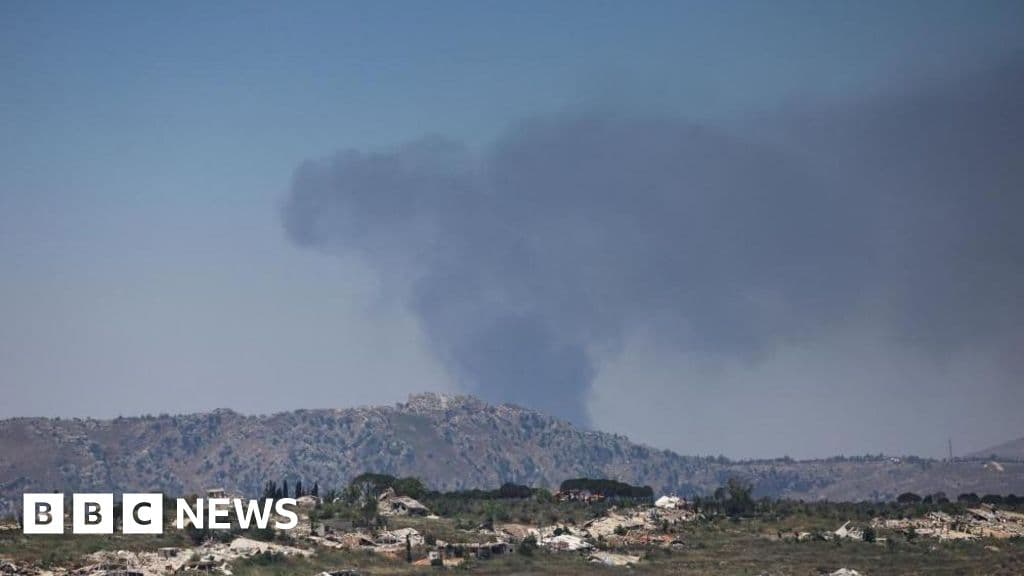
Israel launched fresh strikes on Lebanon, targeting the Nabatieh al-Fawqa area and Kfar Tebn...
"Renewed conflict sparks concern over regional stability. Israeli actions defy US President's warnings."
Israeli forces have carried out new strikes in southern Lebanon, state media reported, despite renewed criticism from US President Donald Trump of Israel's actions in the country. On Wednesday, Israeli jets struck the Nabatieh al-Fawqa area and the outskirts of neighbouring Kfar Tebnit, Lebanon's National News Agency (NNA) reported. The Israeli military has not yet commented, but has previously said it is targeting the Iran-backed armed group Hezbollah.
The latest development comes amid heightened tensions between Israel and Hezbollah, with both sides exchanging attacks since the US-Iran agreement was announced on Sunday night. The agreement, mediated by Pakistan, aims to end the war and includes Lebanon. However, the text of the deal has not been released, leaving many questions unanswered.
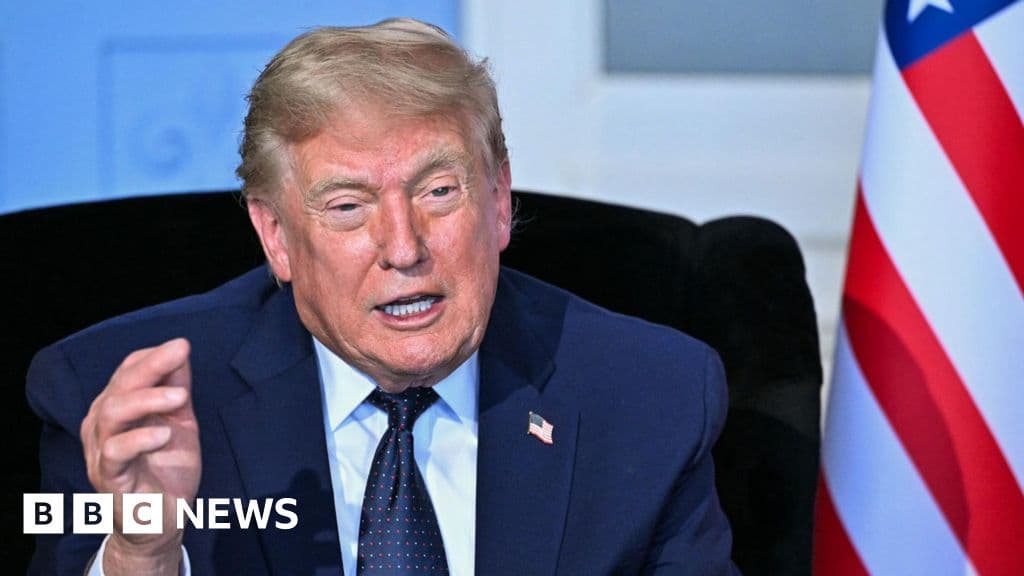
On Tuesday, Trump said Israeli Prime Minister Benjamin Netanyahu needed "to be more responsible with respect to Lebanon". Speaking at the G7 summit in France, he also said that Israel had been fighting Hezbollah for "too long and too many people are being killed". Trump's comments were seen as a rare rebuke of Israel's actions, and sparked speculation about the implications for the US-Israel relationship.
Netanyahu has vowed to continue Israel's military presence in Lebanon "for as long as necessary", despite warnings from Iran's Foreign Minister, Abbas Araghchi, that any Israeli attack on Lebanon or continued military presence in Lebanese territory would be viewed as a violation of the interim agreement. The contents of the agreement, referred to as a memorandum of understanding, have not been officially released.
Both sides were expected to sign the deal on Friday in the Swiss resort of Bürgenstock, according to Switzerland's Foreign Ministry. Trump has said he would likely hold a news conference to publicly read the agreement between the US and Iran "word by word". He has also claimed that the deal would mean Iran would "never have a nuclear weapon" and that the crucial Strait of Hormuz waterway in the Gulf would reopen and be "toll-free".
The deal has been touted as a major achievement for Trump, who has argued that it is better than the one negotiated by his predecessor, Barack Obama. Under the 2015 Joint Comprehensive Plan of Action (JCPOA) with the US and five other world powers, Iran agreed to limit its nuclear activities and allow international inspections in return for sanctions relief and the release of frozen funds. Trump has said that his deal is superior because it did not involve paying billions of dollars to Iran, as Obama's deal did.
However, critics have raised concerns about the lack of transparency surrounding the deal, and the potential implications for regional stability. The fact that Israel has continued to launch strikes on Lebanon, despite Trump's criticism, suggests that the agreement may not be as effective in reducing tensions as hoped. As the situation continues to unfold, it remains to be seen whether the US and Iran can find a lasting solution to the conflict, and what the implications will be for the wider region.
In the meantime, the people of Lebanon remain caught in the middle, facing the threat of ongoing violence and instability. The international community will be watching closely to see how the situation develops, and whether the US and Iran can find a way to bring peace to the region. With the signing of the agreement expected to take place on Friday, all eyes will be on Bürgenstock, as the world waits to see if a new era of peace and cooperation can begin.
The road ahead will be long and difficult, but for now, the people of Lebanon can only hope that a lasting solution can be found, and that the violence and bloodshed will soon come to an end. As the world waits with bated breath, one thing is certain - the situation in Lebanon will continue to be a major focus of international attention, and a test of the ability of the US and Iran to find a way forward, despite their differences.
In conclusion, the latest developments in Lebanon serve as a reminder of the complexities and challenges of the region, and the need for continued diplomacy and engagement to find a lasting solution to the conflict. As the world moves forward, it is clear that the situation in Lebanon will remain a major concern, and a test of the ability of the international community to come together to find a way forward.