Status quo at Jerusalem's holiest site under threat as Israeli nationalists flout rules
"Tensions rise as Israeli nationalists defy rules at al-Aqsa mosque compound, sparking fears of conflict escalation."
Moshe Feiglin, a right-wing Israeli politician, emerged from the al-Aqsa mosque compound in Jerusalem, having prayed and sung religious songs with a group of around 20 other religious Jews. This act was in direct contravention of a sensitive agreement that maintains peace at one of the most holy and emotionally charged places on Earth. Feiglin's words, "the whole land of Israel was promised to the children of God… and this is where we are going to build a new Temple for the entire humanity to come and pray together," were potentially incendiary and highlighted the threat to the status quo at the site.
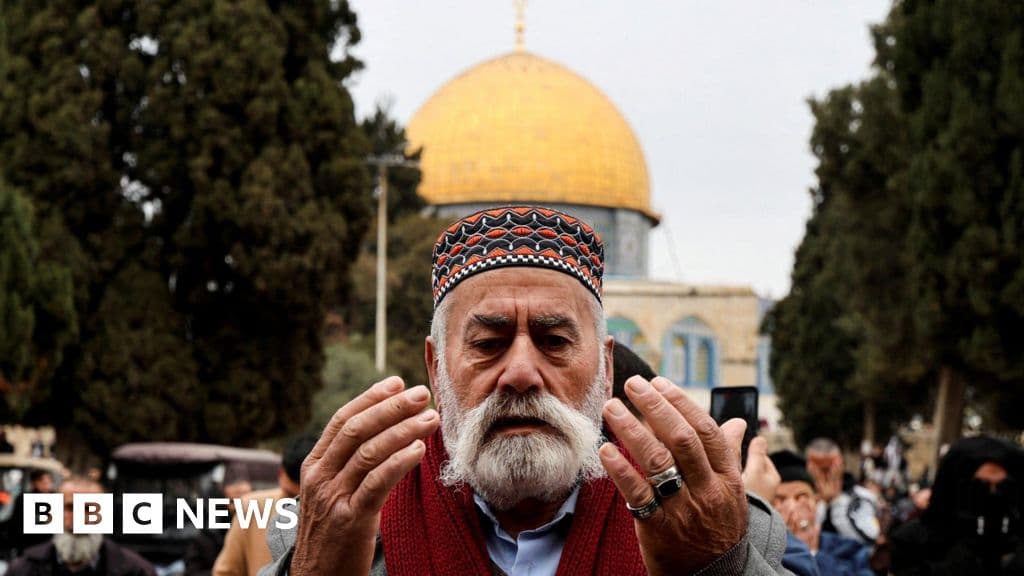
The al-Aqsa compound, also known to Muslims as al-Haram al-Sharif and to Jews as the Temple Mount, is one of the most recognizable and visually impressive sites in the Middle East. The gold-covered Dome of the Rock dominates the 35-acre site and can be seen for miles around. For Muslims, al-Aqsa is a sacred place where the Prophet Muhammad ascended to Heaven, and it is mentioned in the Quran. The site is also the most important place in Judaism, as it is where Jews pray and mourn the destruction by the Romans of the Jewish Temple on the platform above, almost 2,000 years ago.
Under the decades-old Status Quo agreement, custody of the al-Aqsa compound is the responsibility of a Jordanian-administered Islamic body, the Waqf. Non-Muslims are allowed to visit al-Aqsa, but they are not permitted to pray there or carry out religious rites. The Chief Rabbinate of Israel and most ultra-Orthodox rabbis also prohibit Jewish prayer on the site on halachic grounds. However, Feiglin and others now openly flout and disregard these conventions and rulings.
Recent reports and claims that Israeli and US officials are working together to abandon the Status Quo have caused widespread alarm. According to multiple sources, a new body created by the Israeli government would declare the al-Aqsa compound a "multi-faith centre." This would allow large-scale Jewish prayer on the site and gradually transfer governance to Israel, which captured East Jerusalem, including the Old City and its holy places, from Jordan in the 1967 Middle East War and later annexed it in a move not recognized by most countries.
The Israeli prime minister's office has repeatedly stated that there has been no change to the Status Quo. However, the US Secretary of State, Marco Rubio, said he had "no knowledge" of the reports when questioned at a Congressional hearing. In contrast, the US ambassador to Israel, Mike Huckabee, has often spoken out about Jewish connections to the holy places in Jerusalem and the occupied West Bank.
Dr Mustafa Abu Sway, the Deputy Head of the Islamic Waqf Council, warned that any formal change in the Status Quo could easily lead to another explosion of tension between Jews and Muslims. "Peace without leaving al-Aqsa Mosque alone, is simply opening a Pandora's box. It is jeopardising the peace in the region, and it pitches everyone against everyone," he said. Abu Sway, a respected Palestinian expert in Islamic studies and regional history, acknowledged that control of al-Aqsa is a sensitive issue in which Israeli protagonists feel empowered.
The historical context of the site is complex and sensitive. The al-Aqsa compound has been a point of contention between Jews and Muslims for centuries. In 1967, Israel captured East Jerusalem, including the Old City and its holy places, from Jordan. Since then, Israel has maintained control over the site, but the Waqf has been responsible for its administration. The Status Quo agreement has helped to maintain a fragile peace, but it is now under threat from Israeli nationalists who want to build a new Jewish temple on the site.
The implications of a change in the Status Quo are far-reaching and potentially explosive. A multi-faith centre would allow large-scale Jewish prayer on the site, which could lead to clashes with Muslim worshippers. The transfer of governance to Israel would also be seen as a provocative move by the Palestinian population and could lead to widespread unrest. The international community has a critical role to play in maintaining the Status Quo and preventing a escalation of tensions.
In recent years, there has been an increase in visits by Jewish nationalists to the al-Aqsa compound, which has led to tensions with Muslim worshippers. The Israeli government has been criticized for not doing enough to prevent these visits and for allowing the situation to escalate. The international community has called for calm and restraint, but the situation remains volatile.
The US role in the situation is also critical. The US has historically been a key player in the Middle East peace process, and its position on the Status Quo is closely watched. The US Secretary of State's statement that he had "no knowledge" of the reports was seen as a attempt to distance the US from the situation, but it is unlikely to calm the tensions.
In conclusion, the status quo at the al-Aqsa compound is under threat from Israeli nationalists who want to build a new Jewish temple on the site. The implications of a change in the Status Quo are far-reaching and potentially explosive. The international community has a critical role to play in maintaining the Status Quo and preventing a escalation of tensions. The situation remains volatile, and it is essential that all parties involved work towards a peaceful resolution that respects the rights and sensitivities of all parties involved.