As the situation continues to unfold, it is clear that the conflict between Israel and Iran...
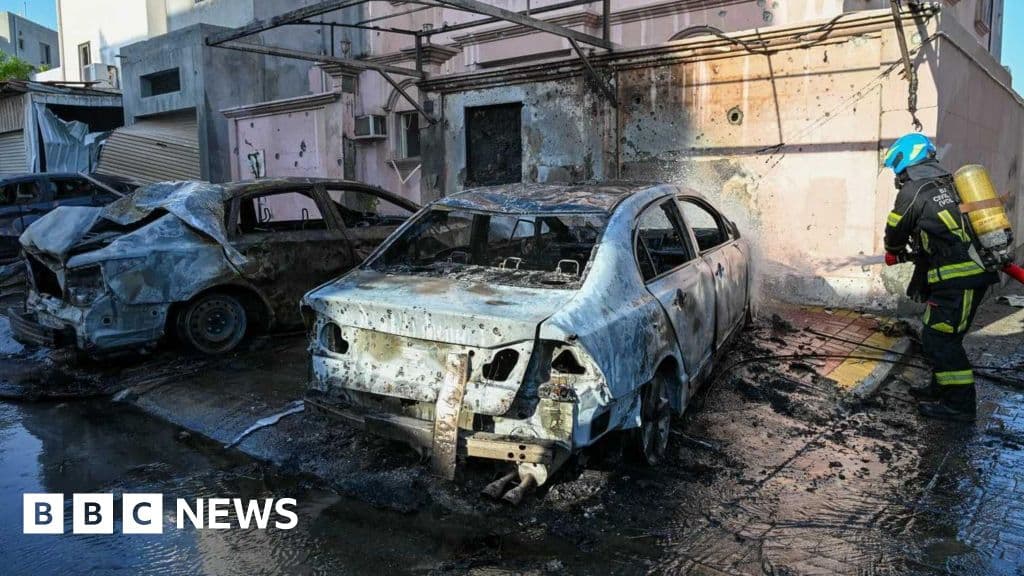
"Tensions escalate as Israel and Hezbollah clash, despite a US-brokered ceasefire. Civilian areas are being targeted, causing widespread destruction."
President Donald Trump spoke with the BBC about his conversations with Israeli Prime Minister Benjamin Netanyahu. Trump said Netanyahu did not defy him by firing at Iran on Sunday. The brief phone call, lasting under a minute, shed light on the complex situation unfolding in the Middle East.
The conflict between Israel and Iran has been escalating, with both sides engaging in airstrikes and missile launches. The situation has been further complicated by the involvement of Hezbollah, a militant group based in Lebanon. The US has been attempting to broker a ceasefire, but so far, the violence has continued.
In the phone call, Trump stated that the missiles were "already on their way" when he spoke with Netanyahu, implying that the Israeli prime minister had not acted against his wishes. Trump also said, "if I tell him to do something, he does it," suggesting a close relationship between the two leaders. However, the situation on the ground tells a different story, with thousands of Israeli celebrants marching through areas captured by Israel in the 1967 Arab-Israeli war.
The consequences of the war are being felt across the region, with tens of thousands of people taking part in the Palestine Marathon, which returned to Bethlehem after a two-year pause. The marathon is a symbol of resilience and hope in the face of conflict and occupation. However, the reality on the ground is stark, with verified videos showing strikes on densely populated neighborhoods in southern Lebanon.
The international community is watching the situation with concern, with the BBC's international editor, Jeremy Bowen, saying that the public is "right to be worried" about the consequences of the war. The conflict has the potential to escalate into a wider regional war, with devastating consequences for civilians and the global economy.
The US has been attempting to navigate the complex situation, with President Trump suspending an operation to guide ships through the Strait of Hormuz. The move is seen as an attempt to reduce tensions and prevent further escalation. However, the situation remains volatile, with Iranian authorities imposing an internet ban and thousands of people taking to the streets to protest against the government.
The conflict has also had a significant impact on the global economy, with the United Arab Emirates (UAE) quitting the oil cartel Opec after nearly 60 years of membership. The move is seen as a response to the changing global energy landscape and the increasing tensions in the Middle East.
As the situation continues to unfold, it is clear that the conflict between Israel and Iran is far from over. The international community is calling for a peaceful resolution, but the reality on the ground suggests that a lasting peace may be difficult to achieve. The US and Iran's rival blockades of the Strait of Hormuz have become a "test of wills," with both sides refusing to back down.
The human cost of the conflict is also being felt, with thousands of people displaced and injured. The BBC's special correspondent, Fergal Keane, has been speaking to those affected by the conflict, hearing stories of trauma and loss. The situation is a stark reminder of the devastating consequences of war and the need for a peaceful resolution.
In the midst of the conflict, there are also stories of hope and resilience. The Palestine Marathon is a symbol of the determination of the Palestinian people to live their lives despite the occupation. The marathon is a reminder that even in the darkest of times, there is always hope for a better future.
As the situation continues to unfold, it is clear that the conflict between Israel and Iran is complex and multifaceted. The international community is watching with concern, and the need for a peaceful resolution is becoming increasingly urgent. The US, Israel, and Iran must work together to find a solution that addresses the concerns of all parties involved. The alternative is a devastating regional war that would have far-reaching consequences for the entire world.